How to Spot Quality Clothing Details in 30 Seconds
Advertisement
How to Spot Quality Clothing Details in 30 Seconds
Walking into a clothing store, you have approximately thirty seconds before attention spans fade and decision fatigue sets in. Yet within that window lies an opportunity most shoppers miss entirely. The difference between a garment that lasts years and one that disintegrates after three washes often comes down to details invisible to the untrained eye.
Understanding how to evaluate quality clothing details transforms not just what you buy, but how you shop entirely. Rather than relying solely on brand names or price tags, you gain a skill that serves you at any price point, from vintage racks to designer boutiques.
This guide equips you with eight specific techniques to assess garment construction in under a minute. These methods work whether you are examining a twenty-dollar basic tee or a two-hundred-dollar specialty piece. The principles remain consistent because quality construction follows universal standards regardless of retail price.
Examining Stitching Precision
The first thing trained eyes gravitate toward is stitching. This seemingly simple element reveals volumes about how a garment was made and who made it. Poor stitching indicates rushed production and corners cut elsewhere in construction.
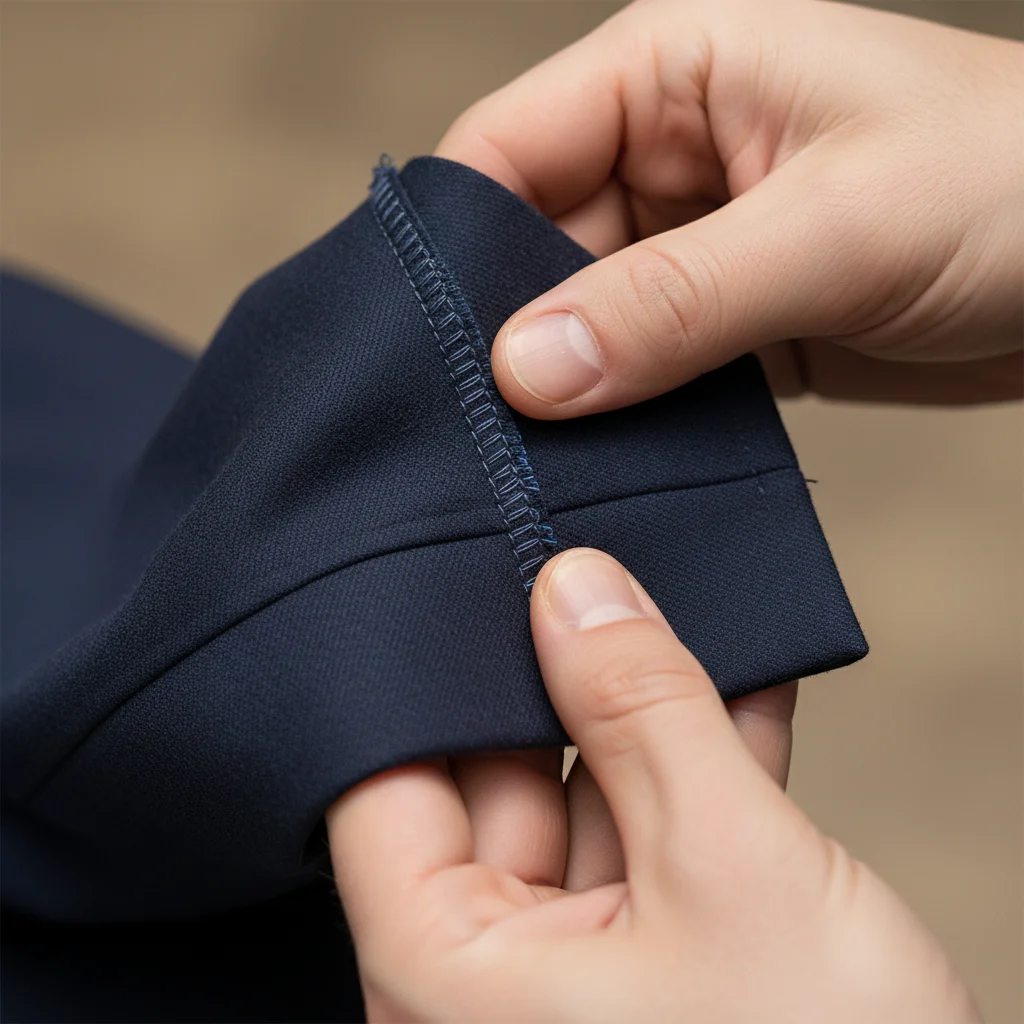
Start by looking at seam alignment. In quality garments, seams meet precisely at intersections rather than petering out or overlapping messily. Run your fingers along the seam—you want to feel consistency rather than bumps or gaps. A well-stitched seam lies flat against the fabric rather than pulling or puckering.
Advertisement
What to Look For in Stitching
Count the stitches per inch as a quick quality indicator. Higher stitch counts mean more time invested and greater durability. Eight to ten stitches per inch represents good quality for most woven garments. You can count this visually or simply trust that tighter, more uniform stitching generally indicates better construction.
- Check seam intersections for perfect alignment
- Look for consistent stitch tension without looping or gaps
- Examine inside seams as carefully as outsidevisible areas
- Notice whether stitching follows straight lines or wanders
The interior of a garment often tells the truth that the exterior conceals. Manufacturers expecting their clothes to be seen only from outside invest less in hidden areas. Flipping a garment inside out during fitting might feel awkward, but it provides invaluable information about true construction quality.
Assessing Fabric Weight and Texture
Fabric quality forms the foundation of garment durability, yet many shoppers evaluate textiles purely by feel—a method that can deceive. While touch provides useful information, understanding what you are feeling matters more than the sensation itself.
Advertisement
Quality clothing details in fabric manifest as density and consistency. Hold the garment up to light—you want to see minimal light passing through, indicating tightly woven material. Thin, translucent fabric often signals garments that will stretch out or show wear quickly. The exception involves deliberately sheer fabrics designed for layering, but these require different construction standards.
Pull the fabric gently in several directions. Quality material returns to its original shape rather than stretching permanently. This recovery ability determines how well a garment maintains its silhouette through repeated wearing and washing. A simple stretch test reveals this characteristic in seconds.
Examine fabric surface for uniformity. Variations, thin spots, or irregularities often indicate lower-grade materials. Natural fibers like cotton, linen, and wool each have characteristic textures—understanding these helps you recognize when something feels wrong for its fiber content. A cotton shirt should feel crisp yet yielding, not papery or overly stiff.
Evaluating Seam Construction
Seams connect fabric pieces, and their construction determines how well a garment holds together under stress. Different seam types suit different purposes, and recognizing appropriate construction for each garment type represents valuable knowledge.
Flat-felled seams, commonly found in quality menswear and denim, encase raw edges completely. These seams resist fraying and lie flat against skin, making them ideal for garments experiencing friction. When you see these seams on a button-down shirt, you are looking at construction designed to last.
French seams, created by enclosing raw edges within a second seam, appear in higher-quality womenswear and delicate fabrics. While more labor-intensive, they create clean interiors that resist unraveling. The presence of French seams often indicates attention to detail throughout the entire garment.
Inspect seam allowance—the distance between stitching and fabric edge. Wider allowances (at least half an inch) allow for alterations and demonstrate confidence in construction. Narrow seam allowances suggest cost-cutting and limited repair potential. This detail proves particularly important in pants and jackets where fit adjustments frequently prove necessary.
Inspecting Button and Fastener Quality
Buttons and fasteners receive less attention than they deserve despite their functional importance. These small elements experience daily stress, and their quality directly impacts garment longevity.
Examine buttons closely. Quality buttons are made from natural materials like mother-of-pearl, horn, or genuine bone. These materials feel heavier than plastic alternatives and show subtle variations in color and texture. Plastic buttons, while functional, often indicate cost-saving measures that may extend to other construction elements.
Look at how buttons are attached. Hand-stitched buttons feature wrapped threads creating a small gap between button and fabric—this allows fabric to lie smoothly and provides durability. Machine-attached buttons sit flush against fabric and may pull away over time. The wrapped thread technique represents one of those quality clothing details that separates well-made garments from their cheaper counterparts.
Test zipper functionality by running them up and down several times. Quality zippers from YKK or Ri zipper glide smoothly without catching. Cheap zippers stick, separate, or require excessive force. In pants and jackets, zipper replacement costs more than you might expect, making this detail worth evaluating carefully.
Checking Lining and Internal Construction
Lining quality often serves as a reliable quality indicator because manufacturers know most shoppers never examine it. Yet the lining reveals construction philosophy—whether the company prioritizes what shows or what lasts.
Feel the lining material. Silk linings in jackets and coats indicate higher quality, while acetate or polyester linings suggest standard construction. The lining should feel smooth and slide easily over clothing worn beneath—rough or stiff linings create discomfort and wear on underlayers.
Examine how lining attaches. Quality garments feature partially unattached lining that allows movement and prevents pulling. Look for functional buttons or loops inside jacket pockets—these small details indicate thoughtful design rather than purely cosmetic construction.
Inspect hem construction on lined garments. The lining should meet the hem cleanly without visible raw edges. Ventilation eyelets in jacket lining (those small holes near the hem) represent another quality indicator, facilitating air circulation and preventing moisture buildup.
Evaluating Trims and Finishings
Trims—collars, cuffs, waistbands, and decorative elements—receive heavy wear and require quality construction to maintain their shape. These elements often determine whether a garment continues looking polished through years of use.
Collar and cuff interlining deserves particular attention. Fused (glued) interlining creates a stiff feel that can bubble or separate after cleaning. Floating interlining, sewn between fabric layers, maintains flexibility and durability. Gently pinch collar edges to feel whether layers move independently or feel glued together.
Waistbands on pants and skirts should have some structure while remaining comfortable. Quality waistbands include canvas or similar supportive material that holds shape without stiffness. Check that waistband stitching follows parallel lines, securing the interlining properly.
Examine pocket construction carefully. Open pockets often lack proper finishing, while welt pockets (the horizontal slit pockets on dress pants and jackets) require precise stitching. The pocket mouth should lie flat and even, with no gaps or misalignment. Interior pockets should feature finished seams rather than raw edges.
Observing Color Consistency and Dye Quality
Color tells stories about manufacturing processes. Subtle inconsistencies reveal shortcuts in dyeing that affect both appearance and durability. While color variation sometimes results from intentional techniques, it often signals quality problems.
Examine color consistency across different fabric sections. Hold the garment under good lighting and look for faded areas, particularly on seams, folds, and areas exposed to wear. Poor dye penetration shows as lighter areas where fabric was folded during processing.
Test color fastness with a simple rub test if possible (stores typically do not permit this, but it works for online purchases upon arrival). Rub a white cloth firmly against fabric—color transfer indicates potential problems with bleeding during washing. This test proves particularly important for dark or vibrant colors that tend to fade.
Check inside fabric for dye saturation. Cut edges often reveal whether dye penetrated fully or merely coated surface fibers. White or pale interiors suggest poor-quality dyeing that will fade unevenly. Full penetration shows consistent color throughout the fabric structure.
Practical Application and Shopping Strategy
Armed with these eight evaluation techniques, you can assess any garment within thirty seconds by following a systematic approach. Start with overall drape and weight, move to stitching visibility, check seams and fasteners, and finish with trim examination. This sequence works whether you are browsing quickly or have time for thorough assessment.
Practice builds speed. Initially, these checks require conscious thought, but repetition transforms observation into instinct. Within weeks, you will naturally notice quality clothing details without deliberate effort. This skill transfers across garment types and price points because construction principles remain consistent.
Remember that no single element guarantees quality—rather, the combination of multiple positive indicators builds confidence in your purchase. A garment might have excellent stitching but poor fabric, or vice versa. Evaluating holistically prevents being misled by impressive single features that mask overall mediocrity.
| Quality Indicator | What to Look For |
|---|---|
| Stitching | 8-10 stitches per inch, consistent tension, no gaps or loops |
| Fabric | Dense weave, returns to shape when stretched, uniform texture |
| Seams | Wide allowances, appropriate type for garment, lie flat |
| Fasteners | Natural material buttons, wrapped thread, smooth zipper operation |
What This Means for Your Wardrobe
Developing the ability to spot quality clothing details changes your relationship with shopping entirely. Rather than relying on brand reputation or sale prices, you gain independence to evaluate garments on their actual construction merits. This skill proves particularly valuable as sustainable fashion gains importance—understanding quality means buying less but buying better.
The thirty-second assessment works because quality clothing details follow consistent patterns regardless of garment type or price. What changes is frequency of these indicators rather than their presence entirely. A twenty-dollar shirt might have some quality elements; a two-hundred-dollar version should have nearly all of them. Knowing what to expect at each price point prevents overpaying while ensuring value at every budget level.
As you practice these techniques, notice how your shopping habits evolve. You may find yourself browsing fewer items but purchasing more confidently. The initial time investment in learning pays dividends through longer-lasting garments and more satisfying purchases. Quality clothing details become not just evaluation criteria but a framework for building a thoughtful, lasting wardrobe.