Kids VR Headsets: 3 Age-Appropriate Models for Immersive Learning
Advertisement
Virtual reality is reshaping how children learn and play. This guide explores the best kids VR headsets designed for safe, age-appropriate immersive experiences. From hardware specifications to educational content, discover which models deliver the right balance of engagement and safety for young users.
Kids VR headsets: Age-appropriate models for immersive learning in 2026
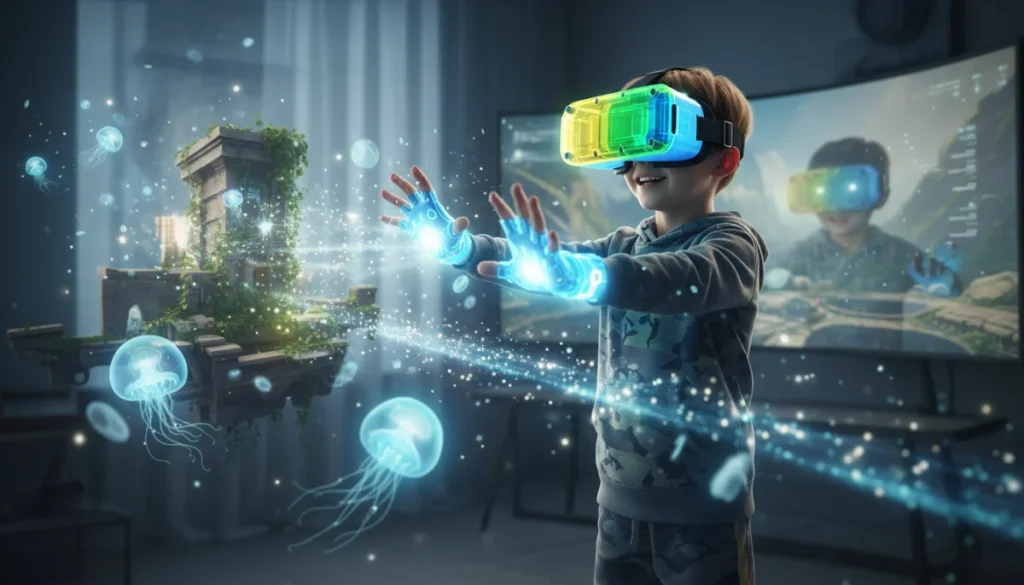
Virtual reality has moved beyond gaming consoles and into classrooms, living rooms, and homeschool environments across the United States. Parents searching for meaningful tech gifts that combine entertainment with education are increasingly turning to kids VR headsets as a solution. These devices offer immersive experiences that can transport young learners to ancient Rome, inside the human body, or to the surface of Mars—all from the safety of their own space.
But not all VR headsets are created equal when it comes to children. The market has responded with specialized devices designed specifically for younger users, featuring age-appropriate content libraries, enhanced safety features, and hardware built to fit smaller heads comfortably. Understanding what separates a genuinely educational VR experience from a generic gaming device is essential for parents making purchasing decisions.
This comprehensive guide examines three standout kids VR headsets available in 2026, breaking down their features, safety considerations, and educational value. Whether you are a parent exploring new learning tools or an educator looking to incorporate immersive technology into the classroom, this analysis will help you find the right match for young explorers.
Why age-appropriate design matters for children’s VR
The difference between adult-oriented VR and devices designed for children extends far beyond aesthetic choices. Children’s developing visual systems require special consideration, and manufacturers have responded with displays that limit blue light exposure and reduce the risk of digital eye strain. The interpupillary distance—the space between a user’s eyes—differs significantly between adults and children, making properly calibrated optics essential for comfortable, safe viewing.
Advertisement
Beyond physical comfort, age-appropriate design encompasses content filtering and parental controls. The best kids VR headsets include robust systems that ensure young users only access material suitable for their developmental stage. Many devices now feature built-in time limits that encourage healthy usage patterns, preventing the extended sessions that can lead to fatigue or disorientation.
Physical safety considerations also drive design choices. Lightweight construction reduces neck strain during extended use, while breathable materials prevent overheating. Some models incorporate pass-through cameras that let children maintain awareness of their physical surroundings, reducing the risk of collisions or trips while immersed in virtual environments.
What to look for in a quality kids VR headset
Selecting the right device requires evaluating several key factors that directly impact the user experience. Display resolution ranks among the most important specifications, as clearer visuals reduce eye strain and create more engaging educational moments. Modern kids VR headsets typically offer resolutions between 1832 x 1920 per eye and 2064 x 2208 per eye, with higher numbers indicating sharper images.
Advertisement
Refresh rate affects how smoothly virtual environments render, with higher rates reducing motion sickness and creating more realistic interactions. Most child-focused devices target 72-90Hz, which provides smooth visual feedback without the demanding hardware requirements of high-end gaming headsets. Tracking capabilities determine how accurately the device responds to head movements, with six-degrees-of-freedom tracking offering the most immersive experience for educational exploration.
Essential safety features to prioritize
When evaluating kids VR headsets, certain safety features deserve special attention. Parental control apps allow caregivers to monitor usage time, approve content before access, and set boundaries on social interactions within VR spaces. These controls should be robust yet manageable, enabling parents to customize restrictions as children demonstrate responsible usage.
IPD adjustment mechanisms allow users to fine-tune the distance between lenses to match their eye spacing precisely. This adjustment is critical for children, whose facial features are still developing. Devices lacking proper IPD adjustment can cause visual discomfort and reduce the educational effectiveness of the experience. Comfort padding, adjustable straps, and breathable face masks contribute to extended use without irritation.
- Built-in blue light filters reduce potential retinal impact during long sessions
- Automatic time reminders encourage healthy usage breaks
- Physical guardian boundaries prevent children from wandering into obstacles
- Hypoallergenic materials protect sensitive skin during extended wear
Top kids VR headsets for educational experiences
The market has matured significantly, offering dedicated options for young learners that balance performance with appropriate content. These three devices represent the current benchmark for parents seeking quality immersive learning tools.
Meta Quest 3S Kids Edition
Meta has established itself as a leader in accessible VR, and the Quest 3S Kids Edition builds on that foundation with family-friendly configurations. The device features a Snapdragon XR2 Gen 2 processor that delivers smooth performance across educational applications and light gaming. Its 4K+ displays (2064 x 2208 per eye) produce crisp visuals that bring educational content to life without overwhelming developing eyes.
What sets this edition apart is its curated parental ecosystem. The Meta Quest 3S includes a comprehensive family dashboard that lets parents approve apps before download, set daily time limits, and view activity reports. The content store features a dedicated kids section with educational titles covering science, history, art, and language learning. Mixed reality capabilities allow children to bring virtual elements into their physical space, creating unique hands-on learning opportunities.
Battery life averages around 2.5 hours of active use, which naturally encourages the breaks necessary for healthy VR habits. The device weighs approximately 1.1 pounds, making it manageable for children aged 8 and up. The included controllers feature simplified button layouts designed for smaller hands, reducing frustration during interactive lessons.
Samsung Galaxy XR Kids
Samsung’s entry into child-focused VR combines the company’s display expertise with intuitive software design. The Galaxy XR Kids utilizes Samsung’s proprietary OLED technology, delivering deep blacks and vibrant colors that enhance educational visualizations. The device operates as a companion to Samsung smartphones, leveraging existing hardware to keep costs accessible while maintaining performance.
Educational partnerships distinguish this headset from competitors. Samsung has collaborated with major educational publishers to create exclusive content libraries covering STEM subjects, language arts, and creative arts. Interactive science simulations let children conduct virtual experiments that would be dangerous or impossible in real-world settings, while history applications transport users to reconstructed ancient sites with unprecedented detail.
The device includes Samsung’s Kids Mode, which activates automatically when a child profile is selected. This mode enables content filtering, usage tracking, and restricted social features. The companion smartphone app provides parents with detailed reports on educational progress, time spent in different content categories, and achievement milestones.
Pico Neo 4 Kids
Pico has carved out a significant position in the educational VR market, and the Neo 4 Kids reflects that focus. The device features inside-out tracking that eliminates the need for external sensors, simplifying setup and allowing use in various locations. Its pancake lenses reduce the overall device weight while improving visual clarity across the entire field of view.
The educational content ecosystem stands as this headset’s strongest feature. Pico has developed relationships with museum partners, educational publishers, and curriculum developers to create a library specifically designed for classroom and homeschool use. Titles include virtual museum tours, interactive science labs, and language immersion programs developed with educational consultants.
Classroom management tools make this particularly attractive for educators. Teachers can monitor student progress in real-time, push specific content to individual headsets, and manage group activities within shared virtual spaces. The device supports multiple user profiles, making it suitable for family sharing or classroom rotation. Battery life extends to approximately 3 hours under normal educational use, with quick-charging capability reducing downtime between sessions.
Maximizing educational value from kids VR headsets
Owning a quality headset represents only the beginning of the educational journey. Thoughtful implementation transforms VR from a novel toy into a powerful learning tool. Establishing clear usage guidelines helps children develop healthy technology habits while maximizing educational benefit.
Curating content libraries before allowing independent exploration ensures children encounter age-appropriate material. Most platforms allow parents to create approved content lists or restrict access to unrated applications. Taking time to preview educational titles helps match content to current learning objectives or areas of child interest.
Creating shared VR experiences amplifies the educational impact. Parents and children exploring virtual environments together can discuss observations, answer questions, and extend learning beyond what the application provides. This collaborative approach transforms passive viewing into active inquiry. Some families have found success using VR as a reward for completing traditional homework, creating positive associations with both activities.
Tracking progress and celebrating achievements maintains motivation. Most educational VR applications include progress tracking, achievement systems, and completion certificates. Acknowledging these milestones encourages continued exploration and reinforces the value of educational effort.
Balancing screen time with physical activity
While kids VR headsets offer remarkable educational potential, maintaining balance with physical activity remains essential. The immersive nature of VR can captivate children for extended periods, making intentional time management critical. Most devices include built-in tools for setting usage limits, but parental involvement ensures these tools work effectively.
Establishing clear boundaries around VR use helps children understand appropriate engagement. Designating specific times for VR learning—perhaps as a treat after completing physical outdoor activities—creates healthy associations. Some families have found success with the 20-20-20 rule: every 20 minutes of VR use, look at something 20 feet away for 20 seconds to reduce eye strain.
Complementing virtual experiences with hands-on activities reinforces learning. After exploring a virtual ocean ecosystem, visiting an aquarium provides real-world context. After a virtual trip to ancient Egypt, reading age-appropriate books about pharaohs deepens understanding. This multi-modal approach leverages VR’s strengths while ensuring children develop well-rounded skills.
Future trends in children’s immersive technology
The VR landscape continues evolving rapidly, with several emerging trends promising to enhance educational applications for children. Haptic feedback technology is becoming increasingly sophisticated, allowing virtual objects to simulate real textures and resistance. This development opens new possibilities for virtual science experiments, art creation, and tactile learning experiences.
Artificial intelligence integration is transforming educational content delivery. Future VR applications will likely adapt difficulty levels in real-time based on user performance, provide personalized feedback, and create customized learning paths. These advances could make VR an even more effective tool for addressing individual learning needs and styles.
Social VR experiences are becoming safer and more age-appropriate, enabling collaborative learning across distances. Virtual study groups, museum visits with distant relatives, and classroom connections with schools around the world are becoming viable options as platforms implement better safety measures and parental controls.
Making an informed purchasing decision
Investing in a kids VR headset requires careful consideration of multiple factors. The right choice depends on your child’s age, educational goals, existing technology ecosystem, and budget. All three devices examined in this guide offer strong educational value, but each excels in different areas.
The Meta Quest 3S Kids Edition offers the most versatile platform with the largest content library, making it ideal for families seeking a single device that grows with their children. The Samsung Galaxy XR Kids provides excellent value for families already invested in the Samsung ecosystem, with particularly strong educational partnerships. The Pico Neo 4 Kids stands out for educators and families prioritizing classroom-ready features and structured educational content.
Regardless of which device you choose, remember that the headset is merely a gateway. The real value lies in how you guide your children’s engagement with immersive technology. Thoughtful implementation, ongoing supervision, and creative integration with other learning activities will determine whether your investment delivers lasting educational benefits.
| Feature | What It Means for Learning |
|---|---|
| Display Resolution | Higher resolution reduces eye strain and creates clearer educational visuals |
| Parental Controls | Essential for managing content access and ensuring age-appropriate experiences |
| Content Library | Educational titles determine the actual learning value beyond hardware specs |
| Battery Life | Longer battery enables extended learning sessions without frequent interruptions |
What comes next
Kids VR headsets represent a significant milestone in educational technology, offering immersive experiences that can transform how children engage with complex subjects. As the technology continues advancing, we can expect even more sophisticated educational applications, improved safety features, and increasingly personalized learning experiences. The key for parents and educators lies in approaching these tools thoughtfully—leveraging their strengths while maintaining the balance necessary for healthy development. The children who grow up with well-implemented VR education will likely develop spatial reasoning skills, visual literacy, and comfort with immersive technologies that will serve them throughout their lives. By choosing age-appropriate devices and guiding their use intentionally, you are preparing your children for a future where immersive learning is simply how education works.