Interior Design Trends: 9 Elements Defining Homes This Season
Advertisement
Interior design trends shaping the modern home
The way we think about our living spaces has fundamentally shifted. What was once purely about aesthetics now encompasses wellness, sustainability, and adaptability. As we move through this season, interior design trends are reflecting a deeper understanding of how our homes impact our daily lives.
From the materials we choose to the colors that dominate our walls, these trends tell a story about what homeowners value most right now. Whether you’re planning a complete renovation or simply looking to refresh a single room, understanding these interior design trends helps you make choices that feel both current and enduring.
Embracing natural and sustainable materials
The shift toward sustainability in home design has moved beyond being a passing trend to become a fundamental principle. Homeowners are actively seeking materials that not only look beautiful but also minimize environmental impact. This change reflects a broader awareness of our responsibility to the planet while creating spaces that feel authentic and grounded.
Reclaimed wood continues to dominate interior design trends, appearing in flooring, accent walls, and furniture pieces. Its unique character and weathered patina add warmth that new materials simply cannot replicate. Bamboo, cork, and rattan have also secured their place in contemporary interiors, offering renewable alternatives to traditional hardwoods.
Beyond wood, natural stone surfaces like marble and soapstone remain popular, but homeowners are now opting for more unusual finishes. Terrazzo, with its speckled appearance and endless customization options, has emerged as a favorite for countertops and flooring. This material combines aesthetics with durability, making it ideal for high-traffic areas.
Advertisement
What makes these materials particularly relevant in current interior design trends is their ability to age gracefully. Rather than seeking perfection, homeowners now appreciate the stories that worn edges and natural variations tell. This appreciation for authenticity transforms ordinary spaces into environments with genuine character.
Biophilic design and indoor-outdoor living
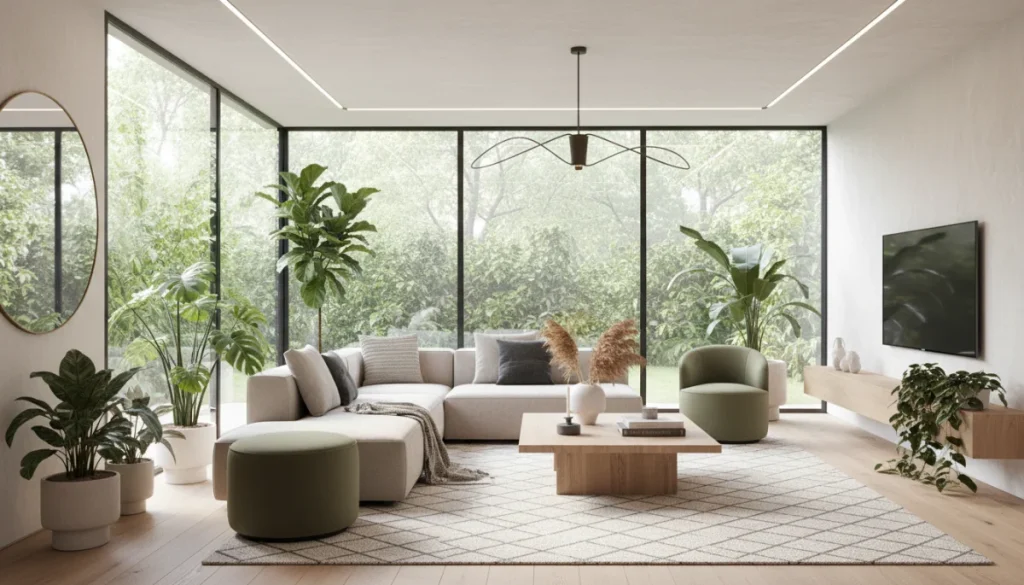
Connecting with nature through our built environments has become essential rather than optional. Biophilic design, which integrates natural elements into interior spaces, represents one of the most influential interior design trends of this season. The philosophy recognizes that humans have an innate need for connection with nature, and our homes can satisfy this need even in urban settings.
Large windows, glass doors, and skylights blur the boundaries between inside and outside. This visual connection to the natural world creates spaces that feel more expansive and calming. Houseplants have evolved from decorative accessories to essential design elements, with homeowners creating living walls and dedicated plant zones that serve as focal points.
Advertisement
Beyond plants, water features and natural light optimization have become priorities. Indoor fountains, aquariums, and even simple bowls of stones and water introduce calming elements. The emphasis on natural light extends to window treatments, with sheer fabrics and minimal coverings allowing maximum daylight penetration while maintaining privacy.
Materials themselves contribute to biophilic design. Textures that evoke natural landscapes—stone surfaces, woven fibers, wood grains—create sensory experiences that ground us. These interior design trends acknowledge that our environments shape our wellbeing, making intentional design choices more important than ever.
Key biophilic elements to incorporate
- Living walls and vertical gardens that bring foliage to eye level
- Natural fiber textiles including linen, cotton, and wool
- Water features ranging from small tabletop fountains to integrated wall features
- Natural wood accents and furniture pieces that showcase organic grain patterns
Bold color statements and earthy palettes
Color in home design has reached a fascinating crossroads. While neutral palettes remain popular for their versatility and timeless appeal, bold color choices are making significant statements in specific applications. This balance defines much of what’s happening in interior design trends right now.
Earthy tones continue to dominate, with terracotta, sage green, warm beige, and clay taking center stage. These colors create backgrounds that feel nurturing and grounded. They pair beautifully with natural materials, enhancing the sustainable aesthetic that characterizes this season’s design direction.
However, accent colors have grown more adventurous. Deep blues, forest greens, and even unexpected choices like burgundy and charcoal are appearing on statement walls, in furniture pieces, and through decorative accessories. The key is strategic placement—bold colors work best when used intentionally rather than throughout entire rooms.
Color blocking has emerged as a technique in interior design trends, with contrasting hues used on adjacent surfaces to create visual interest. A terracotta wall paired with cream trim, or navy cabinetry against light countertops, demonstrates this approach. These combinations feel curated rather than accidental, showing thoughtful design consideration.
The psychology behind these color choices matters. As we spend more time at home, colors that evoke calm and stability have become essential. Meanwhile, bold accents provide the energy and personality that makes spaces feel personally meaningful. This thoughtful approach to color reflects mature understanding of how environment affects mood.
Multifunctional spaces and adaptive design
The way we use our homes has fundamentally changed, and interior design trends have responded accordingly. Spaces that serve multiple purposes have become the norm rather than the exception. A living room might also function as a home office; a dining area could transform into a creative studio.
Flexibility drives this aspect of interior design trends. Furniture on wheels, modular seating systems, and portable partitions allow spaces to reconfigure quickly. Dining tables with expandable leaves, sofa beds, and storage ottomans serve practical purposes while maintaining aesthetic appeal. The goal is creating homes that adapt to changing needs without requiring permanent changes.
Zones within open floor plans have become more defined through subtle architectural elements. Changes in flooring material, ceiling height variations, or strategic lighting placement help distinguish functional areas without closing off spaces. This approach maintains the spacious feel of open plans while providing necessary organization.
Technology integration supports multifunctional living seamlessly. Hidden charging stations, integrated speakers, and smart home systems reduce visual clutter while enhancing functionality. These elements represent interior design trends that prioritize convenience without sacrificing style.
Statement lighting as art
Lighting has transcended its purely functional role to become a primary design element. Among current interior design trends, statement lighting stands out for its ability to transform spaces dramatically. Fixtures are now chosen as sculptural pieces that command attention during daylight hours while providing essential illumination after dark.
Organic shapes dominate lighting design this season. Sculptural pendants inspired by natural forms—flowing curves, branch-like structures, ripple effects—create visual drama. Materials range from glass and metal to more unexpected choices like paper, fabric, and even recycled materials. The diversity of options ensures there’s a statement light for every aesthetic.
Layered lighting remains fundamental to thoughtful interior design. Ambient, task, and accent lighting work together to create versatile spaces. Dimmable fixtures, smart controls, and varied bulb temperatures allow homeowners to adjust atmosphere throughout the day. This flexibility supports different activities and moods within the same space.
Placement has become more creative as well. Rather than limiting fixtures to traditional locations, designers are installing lights in unexpected places—under cabinets, inside closets, along stair treads, and even in unlikely ceiling locations. This approach to lighting reflects interior design trends that prioritize unexpected moments of beauty.
Texture and tactile experiences
Surfaces that invite touch have become essential in contemporary interiors. Texture provides depth and visual interest while engaging our sense of touch. This emphasis on tactile experiences represents interior design trends that acknowledge our need for sensory richness in our environments.
Bouclé, the nubby fabric that emerged strongly in recent years, continues to appear throughout homes. Its texture adds warmth to modern spaces, particularly in seating and bedding. Velvet remains popular for its luxurious feel and light-catching properties. Woven grasses, jute, and sisal introduce natural texture through area rugs and decorative elements.
Layering textures creates complexity and coziness. A smooth marble surface might be paired with a rough-hewn wooden bowl; silky pillows contrast against chunky knit throws. These combinations reflect interior design trends that value depth and visual richness. The goal is spaces that feel inviting and lived-in rather than sterile and museum-like.
Walls receive texture attention as well. Lime plaster, Venetian plaster, and textured wallpapers add dimension to vertical surfaces. These treatments create backgrounds that feel alive rather than flat, contributing to the overall sensory experience of home. When combined with appropriate lighting, textured walls become dynamic elements that change throughout the day.
Curated maximalism and personal expression
While minimalism maintains its appeal, a counter-movement has gained significant traction. Curated maximalism allows for personal expression through collections, art, and meaningful objects. This approach to interior design trends embraces abundance when it tells a story.
The key lies in curation rather than accumulation. Every object in a maximalist space should have meaning or beauty—preferably both. Travel souvenirs, inherited pieces, art acquisitions, and collected treasures create layers of personal history. Unlike clutter, these collections are thoughtfully displayed and arranged.
Pattern mixing has become more confident and sophisticated. Combining different scales and styles of patterns creates visual energy while maintaining cohesion through color relationships. This approach requires eye and experimentation, but when executed well, it produces spaces with tremendous personality and warmth.
Vintage and antique pieces integrate with contemporary elements, creating rooms that feel timeless rather than tied to any single era. This blending of old and new reflects interior design trends that value sustainability through longevity and appreciate the craftsmanship of earlier periods. The result feels collected over time rather than purchased all at once.
Wellness-focused bathroom and kitchen design
Kitchens and bathrooms have evolved beyond purely functional spaces to become personal sanctuaries. Wellness-oriented design principles guide updates to these areas, with attention to air quality, materials, and sensory experiences. These interior design trends recognize that daily routines shape our overall wellbeing.
Bathrooms now feature spa-like elements: rainfall showers, freestanding tubs, heated floors, and chromotherapy lighting. Natural materials like stone and wood create environments that feel restorative rather than clinical. Even the colors chosen for bathrooms tend toward calming hues that support relaxation.
Kitchen design emphasizes both functionality and wellbeing. Improved ventilation, natural material surfaces, and organization systems reduce stress during meal preparation. Islands have become multifunctional gathering spaces rather than merely work areas. The kitchen’s role as the heart of the home continues to strengthen as it accommodates family connection.
Water quality has gained attention, with advanced filtration systems and alkaline water features becoming common additions. Air purification integrated into kitchen and bathroom design addresses indoor air quality concerns. These elements represent interior design trends that prioritize health without compromising aesthetics.
| Trend Category | Key Characteristics |
|---|---|
| Sustainable Materials | Reclaimed wood, bamboo, terrazzo, natural stone with eco-conscious sourcing |
| Biophilic Design | Indoor plants, natural light optimization, water features, organic textures |
| Color Directions | Earthy neutrals paired with bold accent colors, strategic color blocking |
| Adaptive Spaces | Multifunctional furniture, modular systems, technology integration for flexibility |
What comes next
The interior design trends emerging this season reflect broader cultural shifts toward sustainability, wellness, and authentic personal expression. These movements show no signs of fading; rather, they’re evolving and deepening as homeowners gain confidence in making choices that align with their values.
Technology will continue integrating more seamlessly into our environments, supporting the adaptive spaces that modern life requires. Materials science advances promise new sustainable options that don’t sacrifice durability or beauty. As we better understand how our environments affect mental health and productivity, wellness-focused design will become increasingly sophisticated.
The most important takeaway from these interior design trends is the emphasis on intentionality. Whether choosing materials, colors, or furniture, thoughtful consideration of how each element contributes to daily life creates homes that truly serve their inhabitants. This season’s trends encourage us to create spaces that reflect who we are while supporting how we want to live.