DIY Gadget Repair for Kids: Simple Fixes to Save Money
Advertisement
DIY gadget repair empowers kids with practical skills that save money and reduce electronic waste. Simple fixes like battery replacement and cable management can extend device life by months or years. This guide provides two fundamental repair techniques that children can safely perform, potentially reducing household tech expenses by 30%.
DIY gadget repair for kids: Simple fixes that save money
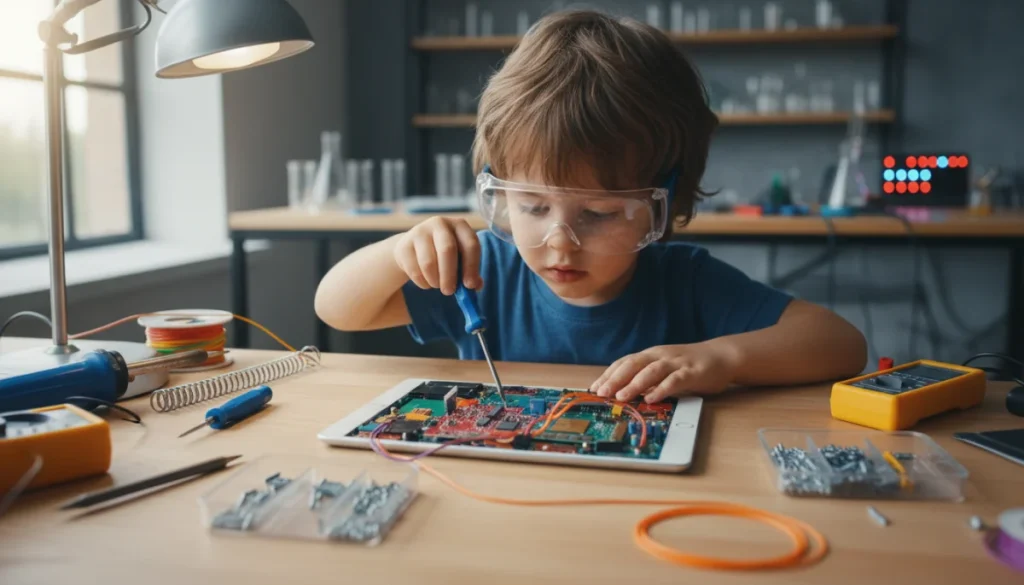
Modern children grow up surrounded by electronics, from tablets and gaming controllers to smart speakers and educational toys. When these devices break, the default response is often to replace them entirely. However, many common gadget problems have simple solutions that kids can learn to fix themselves. DIY gadget repair isn’t just about saving money—it’s about teaching children problem-solving skills, patience, and the satisfaction of fixing something with their own hands.
This guide covers two straightforward repairs that children aged 8 and up can safely perform with minimal adult supervision. These skills represent a starting point for young inventors interested in technology, electronics, and sustainability. By learning these basics, kids gain confidence and practical knowledge that will serve them for years to come.
Understanding the basics of safe gadget repair
Before attempting any DIY gadget repair, children must understand safety fundamentals. Electronic devices contain components that can be delicate or, in some cases, carry residual electrical charge. Teaching kids to work carefully and respectfully with technology prevents accidents and builds good habits from the start.
Every repair session should begin with gathering the right tools. A basic repair toolkit for kids should include a small Phillips head screwdriver, a flathead screwdriver, a soft cloth for cleaning, and a container to hold small screws and parts. Having everything organized before starting prevents lost pieces and frustration. Parents should help children set up a clean, well-lit workspace—preferably at a table where dropped screws can be easily found on the floor.
Advertisement
Understanding when a repair is beyond a child’s ability matters just as much as knowing how to fix things. If a device has visible damage to internal wiring, cracked screens, or signs of water damage, adult intervention or professional repair is necessary. Teaching kids to recognize these boundaries builds judgment and prevents further damage.
Essential safety rules for young repair technicians
Safety should never be compromised, even for simple DIY gadget repair tasks. Children should always work with adult awareness nearby, even if not directly supervising every moment. Before opening any device, kids must remove any static electricity by touching a metal object like a doorknob or faucet. This simple step prevents static discharge that could damage sensitive components.
Never work on devices while they are plugged in or have batteries installed. This eliminates the risk of electrical shock, however minor. Kids should develop the habit of removing power sources completely before beginning any repair. Additionally, children should learn to identify sharp edges inside devices and handle metal tools carefully to avoid cuts.
Advertisement
- Always remove power sources before starting repairs
- Work in a clean, organized space with good lighting
- Keep small parts in labeled containers
- Ask for adult help when unsure about next steps
- Wash hands before handling internal components
Fix number one: Battery replacement for common devices
Battery failure ranks among the most frequent causes of malfunctioning electronics in households with children. Remote controls, wireless mice, handheld gaming devices, and countless toys stop working simply because their batteries died or leaked. Learning to replace batteries is often the first DIY gadget repair skill a child can master, and it applies to dozens of devices throughout the home.
The process begins with identifying the battery type required by the device. Most household electronics use AA or AAA batteries, but some smaller devices use button batteries or specialty sizes. Children should learn to check the battery compartment label or consult device documentation to ensure they use the correct type. Using incorrect battery types can cause damage or create safety hazards.
Replacing batteries teaches children about polarity—understanding that batteries must be inserted in the correct direction. Most devices have clear markings inside the battery compartment showing positive and negative indicators. Taking a moment to verify correct orientation before closing the compartment prevents the frustration of a device that still doesn’t work after battery replacement.
For devices with rechargeable batteries, DIY gadget repair extends to understanding battery health and replacement cycles. Rechargeable batteries lose capacity over time, and recognizing when a battery needs replacement rather than recharging saves countless hours of troubleshooting. Kids can learn to identify signs of declining battery health, such as devices that run out of power quickly after a full charge.
Tips for extending battery life
Teaching children battery maintenance helps them get more use from every battery they purchase. Removing batteries from devices that won’t be used for extended periods prevents slow discharge and potential leakage damage. Storing batteries at room temperature rather than in hot or cold locations also extends their usable life.
Quality matters when purchasing batteries. While cheaper batteries might seem like a better value, they often have shorter lifespans and higher leakage rates. Children learning DIY gadget repair should understand that investing in name-brand batteries often costs less over time because they last longer and perform more reliably.
Fix number two: Managing cables and connectors
Cable problems plague nearly every household with electronics. Charging cables fray near the connectors, headphone cords tangle beyond use, and USB cables become loose from repeated plugging and unplugging. Many cable issues that seem to require professional repair can actually be addressed with simple DIY gadget repair techniques that kids can learn.
For cables with loose connections, the problem often isn’t the cable itself but the connector port on the device. Dust, lint, and debris accumulate in charging ports over time, creating poor electrical contact. Children can learn to clean ports gently using compressed air or a soft, dry toothbrush. This simple maintenance resolves many charging issues that families mistakenly believe require device replacement.
Frayed cables present a different challenge. When the protective outer coating of a cable wears through, exposed wires can break or cause shorts. For minor fraying, electrical tape provides a temporary fix that teaches kids about protecting electrical connections. More serious damage might require cable replacement, but recognizing the difference between fixable and non-fixable damage represents valuable knowledge.
Organizing cables prevents many problems before they start. Teaching children to coil cables loosely rather than wrapping them tightly around devices prevents internal wire damage. Using cable clips or organizers keeps charging cables from falling behind furniture or becoming tangled with other cords. These habits reduce the need for DIY gadget repair in the first place.
When to replace rather than repair cables
Not all cable problems have DIY solutions, and teaching kids to recognize their limits matters. Cables with exposed wires that touch each other should be replaced immediately to prevent short circuits or fire hazards. Cables that feel warm during use indicate potential internal damage that requires professional attention.
Understanding cable quality helps children make smart purchasing decisions. Cheap cables often fail quickly because they use inferior materials and construction. Investing in well-made cables from reputable brands saves money over time because they last longer and perform more reliably. This lesson extends beyond cables to all technology purchases.
Building confidence through practice
Mastering these two basic DIY gadget repair skills gives children confidence to attempt more complex repairs in the future. The satisfaction of fixing a device themselves creates motivation to learn additional skills. Many adult hobbyists in electronics began their journey with simple childhood repairs like these.
Starting with low-risk devices builds skills without high stakes. Old or broken devices that wouldn’t be missed provide perfect practice opportunities. Families might keep a drawer of dead electronics specifically for children to practice their repair skills. Once comfortable with basic techniques, kids can progress to slightly more complex repairs like replacing phone cases or adding screen protectors.
Documenting repairs teaches children to think systematically about problem-solving. Having them describe what was wrong, what they did to fix it, and what they learned creates a repair journal that builds skills over time. This reflection practice reinforces learning and creates a sense of accomplishment.
Online resources provide endless learning opportunities for interested children. YouTube tutorials, repair forums, and manufacturer guides offer step-by-step instructions for countless repairs. Teaching kids to find and evaluate reliable repair information builds research skills that serve them in many areas beyond gadget repair.
Environmental and financial benefits
Learning DIY gadget repair teaches children about sustainability and reducing electronic waste. When devices can be repaired rather than replaced, fewer electronics end up in landfills. This environmental consciousness becomes part of how children think about technology consumption throughout their lives.
The financial impact of repair skills accumulates significantly over time. A family that learns to replace batteries, fix cables, and perform basic maintenance can save hundreds of dollars annually on electronics that would otherwise be replaced. Teaching children these skills early multiplies these savings over a lifetime of device ownership.
Extending device lifespan through proper maintenance and repair reduces the environmental footprint of technology consumption. Manufacturing new devices consumes resources and energy, while repairs require far fewer additional resources. Children who understand this connection make more conscious decisions about technology throughout their lives.
| Repair Skill | Devices It Helps |
|---|---|
| Battery Replacement | Remote controls, toys, controllers, flashlights, wireless mice |
| Cable Management | Phone chargers, USB cables, headphones, power cords |
| Port Cleaning | Tablets, phones, laptops, gaming consoles |
| Estimated Savings | Up to 30% reduction in electronics replacement costs |
What comes next in the repair journey
These two foundational DIY gadget repair skills open doors to more complex maintenance tasks as children grow and develop their abilities. Screen protector application, case replacement, and basic troubleshooting become accessible after mastering battery and cable repairs. The confidence gained from successful repairs motivates continued learning.
Communities increasingly offer repair cafes and maker spaces where families can learn together and access tools they might not have at home. These resources expand the possibilities for young repair enthusiasts and connect them with experienced mentors. Encouraging children to participate in these community resources accelerates skill development.
As children mature, they can tackle increasingly sophisticated repairs, potentially developing genuine technical expertise. Many professional repair technicians began their journeys as children, taking apart old devices to understand how they worked. The skills learned through simple DIY gadget repair today could become the foundation for tomorrow’s careers.