Smart home savings: 2 systems cutting bills by 10% in 2026
Advertisement
Smart home savings: how two systems are cutting household bills by 10%
The average American household spends roughly $2,000 annually on energy bills, a figure that has only climbed with rising utility costs and more extreme weather patterns. What if you could keep every comfort while trimming that expense by a measurable 10%? Two smart home systems are now making that possibility a reality for millions of homeowners across the country.
These technologies represent more than incremental improvements — they mark a fundamental shift in how we interact with our living spaces. By combining intelligent automation with real-time data analysis, today’s smart home platforms can identify energy waste that escapes the naked eye. The result is not just lower bills, but a more sustainable approach to modern living.
This article examines the two primary systems driving these smart home savings, exploring how they work, what makes them effective, and how you can implement them in your own space. Whether you are a tech enthusiast or simply looking for practical ways to reduce monthly expenses, the information here will help you understand why smart home technology has become one of the most accessible tools for household savings.
Intelligent climate control: the heart of smart home savings
Heating and cooling account for nearly half of most home energy budgets. This single category represents the largest opportunity for savings, and smart climate systems have evolved to exploit it brilliantly. Modern smart thermostats do far more than simply turn your HVAC system on and off at scheduled times.
Today’s devices learn your daily patterns, adjusting temperatures based on when you wake up, leave for work, and return home. They factor in outdoor weather conditions, humidity levels, and even the thermal characteristics of your specific home. Some models can detect when windows are open and automatically pause heating or cooling to avoid wasting energy.
Advertisement
The savings potential becomes clear when you examine the data. Households that install smart thermostats typically see energy reductions between 8% and 15%, depending on climate zone and existing system efficiency. In practical terms, that translates to $150 to $300 saved annually on a typical $2,000 energy bill. Over the lifespan of these devices, which generally run for a decade or more, the cumulative savings easily justify the initial investment.
Key features driving climate control savings
The most effective smart thermostats share several characteristics that maximize their savings potential. Geofencing technology uses your smartphone’s location to detect when you are approaching home, triggering comfortable temperatures before you arrive. This eliminates the waste of maintaining ideal conditions in an empty house while ensuring comfort when you need it.
Advertisement
Learning algorithms continuously refine their understanding of your preferences and schedule. After a few weeks, these devices can predict temperature adjustments with remarkable accuracy, pre-conditioning your home based on typical arrival times rather than fixed schedules that may not match your actual routine.
Room-by-room zoning capabilities allow you to focus heating or cooling on occupied spaces. Many homeowners waste significant energy conditioning unused bedrooms or formal living areas. Smart systems with zoning capabilities can reduce this waste by directing climate control only where it is needed.
- Geofencing detects occupancy and adjusts temperatures automatically
- Machine learning algorithms refine schedules over time
- Room zoning targets climate control to occupied spaces
- Weather integration optimizes system performance
Integration with other smart home devices amplifies these benefits. When your smart blinds raise during sunny winter days, the thermostat can reduce heating output, letting natural warmth contribute to indoor temperatures. When humidity spikes, your system can activate dehumidification before mold becomes a concern. These interconnected responses create savings that exceed what any single device could achieve alone.
Automated lighting systems: subtle savings with significant impact
Lighting may seem like a minor energy consumer compared to climate control, but its impact accumulates significantly over time. The average household uses approximately 10% of its total energy for lighting, and smart lighting systems can cut this portion dramatically while adding convenience and security benefits.
Automated lighting goes far beyond simple timers. Modern smart bulbs and switches can adjust brightness based on ambient light conditions, dimming automatically on sunny days when natural light fills your rooms. They can respond to occupancy sensors, turning lights on only when someone enters a room and off after a period of inactivity. This eliminates the classic waste of lights left on in empty rooms.
The financial math is straightforward but compelling. Replacing traditional incandescent bulbs with smart LED alternatives reduces lighting energy consumption by up to 75%. Adding automation that ensures lights are never left on unnecessarily can push total savings beyond 80% compared to conventional setups. For a household spending $200 annually on lighting, this represents savings of $160 or more each year.
The convenience factor that reinforces savings
What makes automated lighting particularly effective is how convenience reinforces savings behavior. Homeowners who install smart lighting systems report that they rarely manually control their lights anymore. The automation becomes invisible, handling details without conscious effort while consistently delivering lower energy consumption.
Vacation modes add another layer of savings and security. Rather than leaving lights on timers that signal your absence to potential intruders, smart systems can simulate occupied patterns with randomized lighting that appears natural to observers. This protects your home while avoiding the waste of constant illumination.
Integration with voice assistants and morning routines creates seamless experiences that make energy-efficient behavior feel effortless. Waking up to gradually brightening lights that simulate sunrise uses less energy than harsh alarm clocks while supporting natural sleep cycles. These small conveniences build habits that compound over time.
The bulbs themselves last significantly longer than traditional options, often rated for 25,000 hours or more compared to 1,000 hours for incandescent bulbs. This longevity means fewer replacements, reducing both waste and ongoing costs.
Integration and ecosystem benefits
Individual smart devices deliver meaningful savings, but the real power of smart home technology emerges when these systems work together. The integration between climate control and lighting creates synergies that amplify benefits beyond what each system could achieve independently.
Consider how your smart thermostat interacts with your smart blinds and lighting. On a cold winter morning, your system might raise blinds to capture solar heat while adjusting lighting to provide comfortable illumination at lower brightness levels. The thermostat reduces heating output because solar gain contributes to warming your space, while lighting uses less energy because natural light supplements artificial sources.
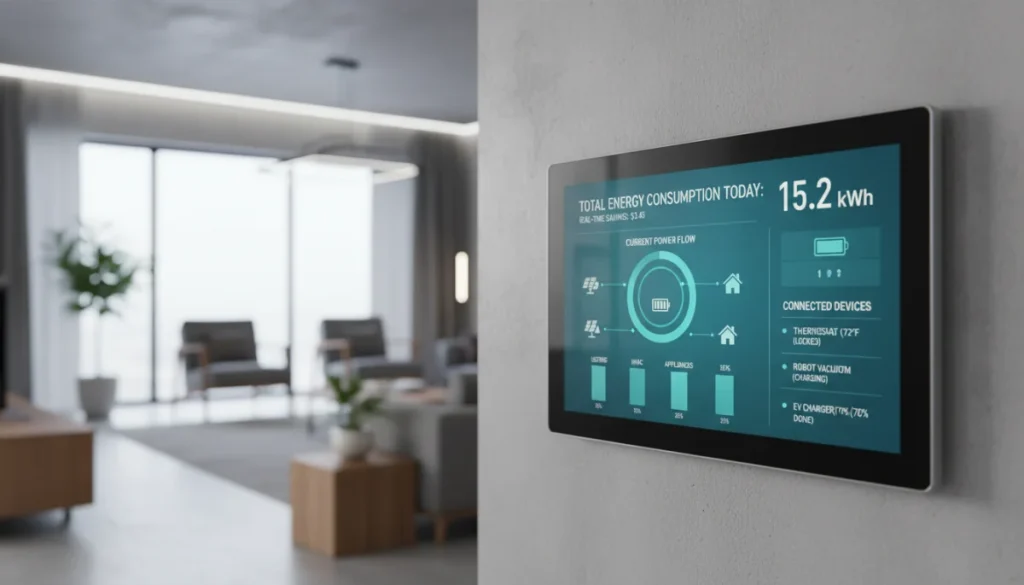
Energy monitoring dashboards give you visibility into consumption patterns that would otherwise remain invisible. You might discover that your home theater system consumes more energy than you realized, or that certain appliances create phantom loads when turned off but not unplugged. This information empowers informed decisions about where additional efficiency improvements might help.
Many utility companies now offer rebates and incentives for smart home installations, recognizing that distributed efficiency improvements reduce strain on grid infrastructure. These programs can offset a significant portion of initial costs, making the return on investment even more attractive. Checking with your local utility about available incentives should be one of your first steps when considering smart home upgrades.
Practical implementation strategies
Starting your smart home savings journey does not require a complete home overhaul. Both climate control and lighting systems are designed for incremental implementation, allowing you to build your setup over time while immediately benefiting from each addition.
For climate control, begin with a single smart thermostat installed in your primary living area. Most systems are designed for DIY installation, taking under an hour for typical homes. The thermostat will begin learning your patterns immediately, and you can typically expect to see energy reductions within the first billing cycle. As your budget allows, adding smart vents or room sensors can enhance performance in larger homes.
For lighting, start with high-traffic areas where lights are frequently left on — hallways, bathrooms, and kitchens are excellent candidates. Smart bulbs simply screw into existing fixtures, making them the easiest entry point. For switches controlling multiple lights, smart switches replace traditional ones and provide automation for entire rooms with a single device.
Building your system gradually allows you to learn how each component works and how they integrate. Many homeowners find that starting small helps them understand the technology before expanding to more comprehensive installations. The key is beginning, because every month you wait is a month of potential savings you cannot recover.
What to look for in smart home devices
Not all smart home devices are created equal, and understanding key differences helps you make informed purchasing decisions. Compatibility is perhaps the most critical consideration — ensuring your devices work together maximizes the integration benefits that drive the greatest savings.
Look for devices that support major smart home platforms like Matter, the emerging standard that promises seamless interaction between products from different manufacturers. This future-proofs your investment and allows you to mix and match devices without worrying about proprietary limitations.
Energy reporting capabilities vary significantly between products. Some devices provide detailed consumption data, while others offer only basic information. If you want to track your savings accurately, prioritize devices with robust energy monitoring features that integrate into unified dashboards.
Customer support and software updates matter more than many buyers realize. Devices that receive regular firmware updates continue improving over time, adding new features and addressing security concerns. Companies with track records of long-term support provide better value than those that abandon products after initial sales.
Warranty terms also deserve attention. Quality smart home devices typically come with two to three year warranties, reflecting manufacturer confidence in their products. Avoid devices with minimal warranty coverage, as they may indicate lower build quality or anticipated reliability issues.
Looking ahead: the future of smart home savings
The smart home industry continues evolving rapidly, with new capabilities emerging that will further enhance savings potential. Artificial intelligence is becoming increasingly sophisticated, enabling systems that anticipate your needs with little or no input. The next generation of smart home technology will predict patterns rather than simply respond to them.
Grid-responsive technologies represent a significant emerging opportunity. Soon, smart home systems will automatically adjust consumption based on grid conditions, shifting flexible loads to times when renewable energy is abundant and prices are lowest. Early pilots show potential savings of an additional 5% to 10% beyond what current systems achieve, simply by optimizing when energy is used rather than just how much.
Battery storage integration is transforming how households think about energy consumption. Combined with smart home systems, home batteries allow you to store solar energy for evening use or take advantage of low overnight rates. These systems can significantly reduce peak demand charges that make up a growing portion of utility bills.
The convergence of these technologies points toward a future where smart home savings become even more substantial. Early adopters of today’s systems are positioning themselves to benefit from these advances as they mature and become widely available.
| System | Savings Potential |
|---|---|
| Smart Climate Control | 8-15% reduction in heating and cooling costs, averaging $150-$300 annually |
| Automated Lighting | Up to 80% reduction in lighting energy, with additional convenience benefits |
| Integrated Systems | Combined savings exceed 10% when climate and lighting work together with other devices |
| Future Technologies | Grid-responsive and storage integration could add 5-10% additional savings as these technologies mature |
What comes next
The 10% reduction in monthly bills that smart home systems can deliver represents more than immediate savings — it marks the beginning of a fundamental transformation in how households interact with energy. As these technologies continue advancing, the gap between traditional and smart homes will only widen, making the decision to adopt increasingly impactful.
Starting with either a smart thermostat or smart lighting system provides immediate benefits while building familiarity with the technology. From there, expansion becomes natural as you experience how automation simplifies daily life while reducing costs. The key is beginning, because each month of delay is a month of savings lost.
For those serious about maximizing smart home savings, the combination of intelligent climate control and automated lighting provides the strongest foundation. These systems deliver proven results, work reliably, and integrate seamlessly to create benefits greater than the sum of their parts. The technology has reached a point where meaningful savings are accessible to virtually any homeowner willing to make the initial investment.