Smart Home Devices: 7 Must-Have Gadgets for Modern Living
Advertisement
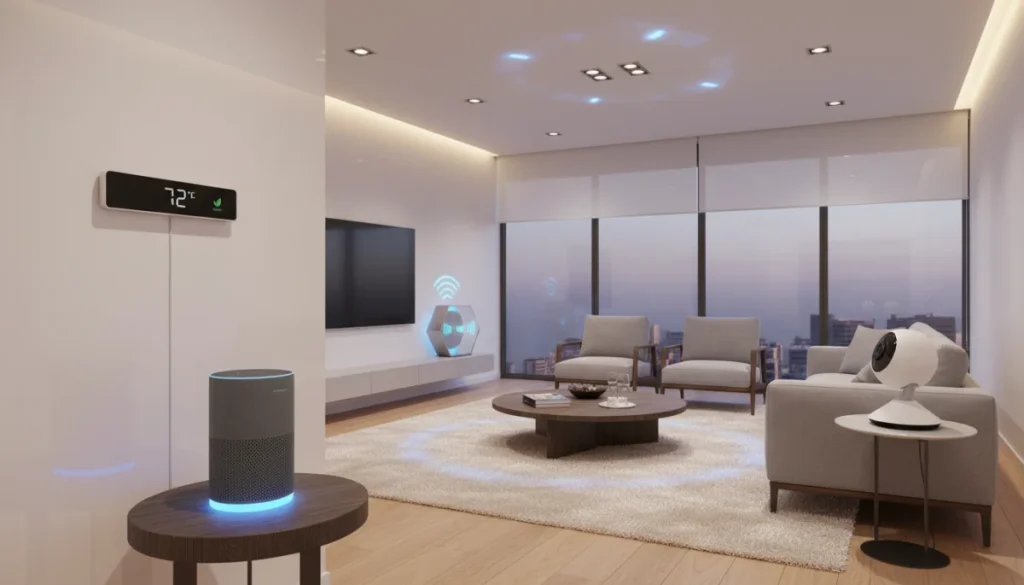
Smart home devices have evolved from luxury novelties into essential components of efficient modern living. This comprehensive guide examines seven transformative gadgets that integrate seamlessly into everyday life, delivering measurable improvements in comfort, security, and energy management. Whether you’re a first-time buyer or looking to expand an existing setup, understanding which devices deliver the best return on investment helps create a truly intelligent home.
Smart home devices: 7 must-have gadgets for a more efficient living space
The concept of a truly intelligent home has moved far beyond remote-controlled lights and programmable timers. Today’s smart home devices communicate with each other, learn from your habits, and make decisions that improve your quality of life without requiring constant attention. For many homeowners, the difference between a standard house and a smart home now translates to measurable savings in utility costs, enhanced security, and a level of convenience that felt like science fiction just a decade ago.
If you’ve been considering where to start building your connected home, the good news is that entry points have never been more affordable. The technology has matured significantly, with major manufacturers competing to deliver reliable, user-friendly products that work together across brands. What once required professional installation and significant investment can now be accomplished with plug-and-play devices that anyone can set up in under an hour.
Intelligent climate control: the smart thermostat
The smartest investment most homeowners can make is replacing their traditional thermostat with an intelligent climate control system. These devices do far more than allow you to adjust temperatures from your phone. They learn your schedule, detect when you’re away from home, and automatically optimize heating and cooling cycles to minimize energy waste while maintaining comfort.
Modern smart thermostats integrate weather data into their algorithms, adjusting pre-heating or pre-cooling based on forecast conditions. Some models even monitor humidity levels and air quality, providing alerts when filters need changing or when indoor conditions drift outside healthy parameters. The initial cost, typically ranging from $150 to $250, frequently pays for itself within two heating and cooling seasons through reduced utility bills.
Advertisement
Installation has become remarkably straightforward, with most units designed for DIY setup in homes with standard HVAC systems. The companion mobile applications provide detailed energy usage reports, helping you understand exactly where your money goes and identifying opportunities for additional savings. For renters or those not ready for a full thermostat replacement, portable smart air conditioners and heaters offer similar benefits without permanent installation.
Key benefits of smart climate control
Beyond obvious convenience factors like adjusting your home’s temperature from bed or while returning from work, these systems provide peace of mind through remote monitoring. Forgot to turn down the heat before leaving for vacation? A few taps on your phone resolves the issue instantly. Many insurance companies now offer discounts for homes equipped with smart thermostats, recognizing the reduced risk of pipe freezes and related water damage.
- Energy savings of 10-15% on average annual heating and cooling costs
- Remote monitoring and control from anywhere with internet connectivity
- Learning algorithms that adapt to your schedule automatically
- Integration with other smart home devices for coordinated automation
- Detailed usage analytics that help identify inefficiencies
Voice assistants: the central brain of your smart home
Voice-activated smart speakers have evolved into the central hub that ties together all your connected devices. These cylindrical or spherical devices sit quietly in your kitchen, living room, or bedroom, waiting to respond to your commands or automate routines based on time of day, presence detection, or other triggers you’ve configured.
Advertisement
The major platforms from Amazon, Google, and Apple each offer distinct advantages depending on your ecosystem preferences and specific needs. Amazon’s Alexa excels in smart home compatibility with the broadest range of third-party device support. Google’s Assistant provides superior natural language processing and integration with Google services. Apple’s HomeKit emphasizes privacy and seamless integration with iOS devices, though the compatible device selection remains somewhat narrower.
Beyond basic voice commands like turning lights on or off, these assistants can manage complex routines. A single phrase like “good morning” can trigger your coffee maker, raise your blinds, read your calendar appointments, and provide a weather update. Setting up these automations requires no programming knowledge, with intuitive mobile apps guiding you through the process step by step.
Intelligent lighting: beyond simple on and off
Smart lighting has come a long way from the early days of expensive hue bulbs that required bridges and hubs. Today’s options include everything from affordable dimmable smart bulbs to sophisticated recessed lighting systems that integrate seamlessly with your ceiling. The benefits extend far beyond the novelty of controlling your lights with your voice.
Quality smart lighting systems offer tunable color temperature, allowing you to shift from cool, energizing white light in the morning to warm, relaxing amber tones in the evening. This natural light mimicry supports your circadian rhythm, potentially improving sleep quality and daytime alertness. Some systems even adjust automatically based on local sunrise and sunset times, requiring zero manual intervention once configured.
Motion sensors add another layer of automation, turning lights on when you enter a room and off after you’ve left. This proves particularly valuable in hallways, bathrooms, and closets where fumbling for switches is inconvenient. For households with members who frequently forget to turn lights off, the automatic shutoff alone can justify the investment through reduced electricity bills.
Popular smart lighting options
Whether you prefer the flexibility of portable bulbs or the clean aesthetic of integrated fixtures, the market offers solutions for every preference and budget. Bulb replacements work in existing lamps and fixtures, making them ideal for renters or those not ready to commit to hardwired solutions. For new construction or major renovations, integrated systems provide a more permanent and often more elegant result.
- Smart bulbs: easy installation, perfect for renters, portable between fixtures
- Smart switches: require neutral wire, control existing bulbs, more permanent
- LED strips: ideal for accent lighting behind furniture or under cabinets
- Integrated fixtures: clean look, often requires professional installation
- Motion sensors: automate activation without voice or app commands
Smart security: protecting what matters most
Home security has been transformed by smart technology, with systems that once required expensive professional monitoring now accessible to anyone with a smartphone and internet connection. Video doorbells have become perhaps the most visible example, allowing you to see and speak with visitors whether you’re home or across the country.
Modern smart security cameras offer impressive image quality, including color night vision and HDR capabilities that handle challenging lighting conditions. Cloud storage subscriptions provide peace of mind that footage survives even if the camera itself is stolen, though local storage options exist for those preferring to keep everything in house. Two-way audio lets you deter package thieves or instruct delivery personnel where to leave packages.
Smart locks eliminate the need for physical keys entirely, granting temporary access to guests, service workers, or family members through the mobile app. Activity logs track who enters and exits your home and when, providing accountability and peace of mind. Many models feature fingerprint recognition or PIN codes as backup access methods, ensuring you aren’t locked out if your phone battery dies.
Professional monitoring services remain available for those wanting round-the-clock protection, but self-monitored systems have become remarkably capable. Push notifications alert you immediately to motion or door/window sensor triggers, and the lower monthly costs make professional monitoring optional rather than necessary.
Smart plugs and power management
One of the simplest entry points into smart home technology comes in the form of smart plugs, which add connectivity to any standard electrical device. These compact devices fit between your outlet and the plug of your lamp, appliance, or electronic equipment, enabling remote control and scheduling through your phone or voice assistant.
The applications are nearly endless. Turn off that space heater you always forget to unplug before leaving work. Schedule your coffee maker to start brewing before your alarm goes off. Create lighting routines that make your home appear occupied when you’re traveling. Energy monitoring plugs even track power consumption, revealing which devices are quietly adding to your electricity bill.
For renters or those not ready to invest in comprehensive smart home systems, smart plugs offer an excellent starting point. Prices have dropped significantly, with reliable options available for under $15 each. The companion apps are typically free, and no additional hubs or bridges are required for most models. This low barrier to entry makes experimenting with home automation accessible to virtually any budget.
Robot vacuums: automated floor care
The chore of vacuuming has been fundamentally changed by autonomous robots that navigate your home, avoiding obstacles and returning to their charging stations when finished. While early models often got stuck or missed spots, current generation devices have evolved into genuinely useful tools that maintain clean floors with minimal human intervention.
Premium models now feature LiDAR navigation that maps your home with remarkable accuracy, ensuring complete coverage without random bouncing. Some vacuums automatically detect carpet versus hard flooring, adjusting suction power accordingly. Self-emptying bases mean you might only need to interact with your robot vacuum monthly rather than after every cleaning cycle.
Integration with other smart home devices enables powerful automation. Your robot vacuum can start cleaning automatically when everyone leaves home, using presence detection from your phone or other smart home sensors. Scheduled cleanings ensure your floors stay tidy without you ever having to think about vacuuming. For homes with pets, the consistent cleaning helps control allergens and pet hair accumulation.
Smart kitchen appliances
The kitchen, often considered the heart of the home, has become a major focus for smart device manufacturers. From refrigerators that track expiration dates to ovens you can preheat from your car, these appliances promise to streamline meal preparation and reduce food waste. While prices remain higher than their non-smart counterparts, the convenience and functionality benefits appeal to many homeowners.
Smart coffee makers exemplify the category perfectly, offering wake-up routines that start brewing at your desired time, custom strength and temperature settings, and integration with other morning routines. Some models learn your preferences and automatically prepare your usual order. Connected sous-vide devices and smart thermometers take the guesswork out of cooking proteins to perfect temperatures.
For those concerned about water conservation or appliance efficiency, smart water leak detectors placed near potential problem areas like water heaters, washing machines, and under sinks provide early warning of leaks. These small sensors can save thousands of dollars in water damage repairs by alerting you to issues while they’re still manageable.
| Device Category | Primary Benefits |
|---|---|
| Smart Thermostats | 10-15% energy savings, remote control, learning automation |
| Voice Assistants | Central control hub, routine automation, hands-free operation |
| Smart Lighting | Circadian rhythm support, energy savings, mood customization |
| Security Systems | Remote monitoring, smart locks, video doorbells |
What comes next
The smart home landscape continues evolving rapidly, with artificial intelligence driving increasingly sophisticated automation. Matter, the new universal smart home standard, has finally begun delivering on its promise of cross-platform compatibility, meaning devices from different manufacturers work together more seamlessly than ever before. This development addresses one of the biggest pain points that has frustrated consumers for years.
Looking ahead, expect sensors to become more contextually aware, understanding not just that someone is home but what they’re doing and anticipating needs before they arise. Energy management will become increasingly sophisticated as utilities offer time-of-use pricing and smart home devices automatically shift consumption to cheaper off-peak periods. The integration between vehicles and homes will strengthen, with electric vehicle charging, climate preconditioning, and power sharing becoming standard features.
For those just beginning their smart home journey, starting with a single category like lighting or climate control and expanding gradually makes the most sense. The technology is mature enough that even basic implementations deliver genuine value, while the most advanced features remain accessible to those who want them. Your perfect smart home isn’t about having the most devices, but rather having the right devices that work together to make your life more comfortable, convenient, and efficient.