Smart home technology: 7 innovations changing how we live in 2026
Advertisement
Smart home technology: 7 innovations changing how we live in 2026
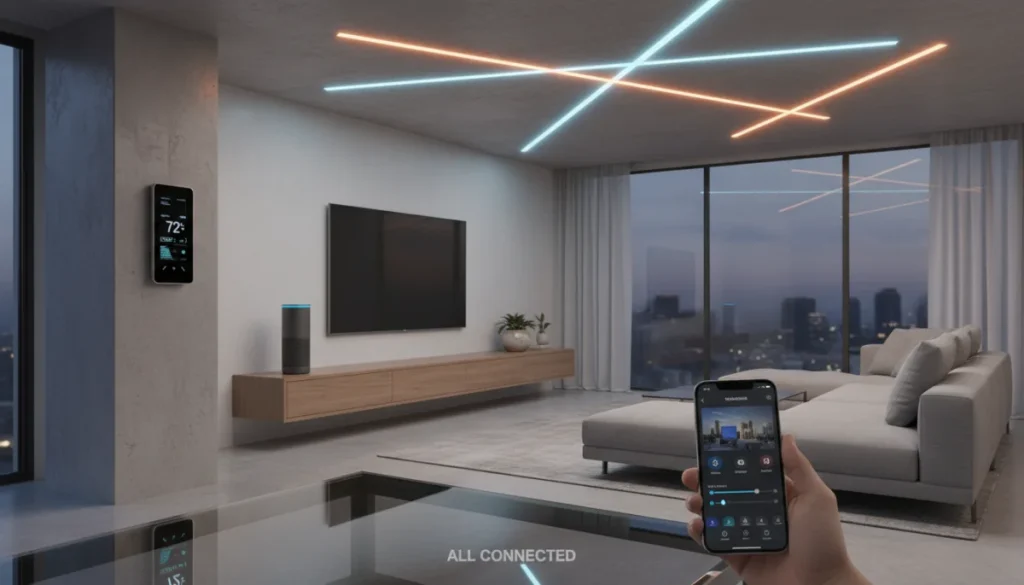
The American home has undergone a remarkable transformation. What began as simple convenience devices has evolved into an interconnected ecosystem that actively manages energy consumption, enhances security, and anticipates daily needs. Smart home devices are no longer luxury additions—they have become foundational elements of modern living.
Recent market analysis shows that adoption of intelligent home technology has accelerated dramatically, with households across the country integrating multiple connected devices into their routines. This shift represents more than technological enthusiasm; it reflects a fundamental desire for efficiency, security, and environmental responsibility.
This exploration examines seven innovations driving the smart home revolution in 2026. Each technology addresses specific challenges faced by modern households while contributing to broader benefits for individual consumers and the environment.
Intelligent climate control systems
The thermostat has evolved from a simple temperature dial into an intelligent climate manager that learns household patterns, adapts to weather forecasts, and optimizes energy usage without sacrificing comfort. Modern smart home devices in this category now integrate with weather services, occupancy sensors, and utility company programs to create truly responsive heating and cooling systems.
These advanced climate systems analyze dozens of data points simultaneously. They consider not just current temperature but predicted outdoor conditions, time of day, household occupancy patterns, and even utility rate fluctuations. The result is a home environment that maintains comfort while reducing energy waste.
Advertisement
The financial impact has caught consumer attention. Many households report savings exceeding fifteen percent on heating and cooling costs after installing intelligent climate control. When multiplied across millions of homes, the cumulative effect on national energy consumption becomes significant.
Key features of modern climate control
Today’s leading systems offer capabilities that would have seemed futuristic just a few years ago. Machine learning algorithms continuously refine temperature schedules based on actual household behavior rather than programmed assumptions. Geofencing technology automatically adjusts settings when residents leave or approach home. Integration with renewable energy sources allows systems to maximize usage of solar or wind power during optimal production times.
- Learning algorithms that adapt to household schedules without manual programming
- Multi-room sensors that optimize distribution throughout the home
- Utility company integration for demand response programs
- Voice control compatibility with major virtual assistants
- Detailed energy usage reporting through mobile applications
Advanced security ecosystems
Home security has transformed from reactive alarm systems into proactive protection networks. Modern smart home devices in the security category now offer real-time threat detection, intelligent distinction between routine visitors and potential intruders, and seamless integration with emergency services.
Advertisement
The sophistication of these systems extends beyond simple motion detection. Video doorbells now feature facial recognition capabilities, distinguishing between family members, expected visitors, and unknown individuals. Interior cameras incorporate privacy features that automatically disable recording when authorized residents are home. Window and door sensors provide granular awareness of home access points.
Integration represents the true advancement in home security. Modern systems connect cameras, locks, sensors, and alarms into unified platforms that can be monitored and controlled from anywhere in the world. When suspicious activity occurs, homeowners receive immediate notifications with video evidence, enabling informed decisions about responding to potential threats.
Smart lighting innovations
Lighting has become one of the most accessible entry points for smart home technology. The evolution from simple smartphone-controlled bulbs to sophisticated lighting ecosystems demonstrates how convenience can drive broader adoption of intelligent home technology.
Contemporary smart lighting systems offer far more than remote on-off functionality. Tunable white light technology adjusts color temperature throughout the day, supporting natural circadian rhythms and improving sleep quality. Motion-activated pathways provide safety without the need for manual switching. Integration with entertainment systems creates immersive experiences through synchronized lighting effects.
Energy efficiency gains in lighting have been substantial. LED technology combined with intelligent control systems reduces lighting energy consumption by up to seventy-five percent compared to traditional incandescent bulbs. When these savings are multiplied across all rooms and extended to outdoor lighting, the impact on household energy bills becomes meaningful.
Intelligent kitchen appliances
The kitchen, often considered the heart of the home, has become a focal point for smart home innovation. Refrigerators that monitor inventory and suggest recipes, ovens that preheat remotely, and coffee makers that anticipate morning routines represent the practical application of connectivity to everyday activities.
These appliances communicate with each other and with homeowners through dedicated applications. A smart refrigerator might notice that milk inventory is low and add it to a shopping list, or suggest dinner options based on available ingredients. Connected ovens can be preheated during the commute home, ensuring dinner is ready when family members arrive.
Food waste reduction represents a significant benefit of intelligent kitchen technology. By tracking expiration dates and suggesting recipes for ingredients approaching their use-by window, smart refrigerators help households minimize waste. This capability addresses both financial and environmental concerns, aligning with growing consumer interest in sustainable living practices.
Popular smart kitchen integrations
The most successful kitchen implementations create seamless workflows rather than isolated gadgets. A morning routine might trigger the coffee maker to start as the smart thermostat completes its wake-up schedule. Meal preparation can activate range hood fans automatically based on cooking activity detected by temperature and humidity sensors.
- Refrigerators with internal cameras and inventory tracking
- Ovens with remote preheat and automatic cooking programs
- Smart coffee makers with scheduled activation
- Connected dishwashers optimized for energy-efficient cycles
- Leak detectors under sinks and near appliances
Voice assistant integration
Voice control has emerged as the primary interface for smart home interaction. The natural language processing capabilities of modern assistants allow homeowners to control devices, retrieve information, and manage complex routines through simple spoken commands. This accessibility has been crucial in driving adoption across age groups and technical comfort levels.
The ecosystem approach taken by major technology companies has created cohesive experiences that span multiple device categories. A single voice assistant can manage climate control, lighting, security, entertainment, and information retrieval without requiring separate applications or interfaces for each function.
Routine automation has become increasingly sophisticated. Homeowners can create multi-step actions triggered by simple voice commands or contextual triggers. Saying goodnight might lock doors, arm the security system, adjust thermostat settings, and dim lights throughout the home. These automations transform individual smart home devices into integrated living solutions.
Energy monitoring and management
Understanding energy consumption has become essential for households seeking to reduce both costs and environmental impact. Smart home devices now provide unprecedented visibility into how energy is used throughout the home, enabling informed decisions about efficiency improvements.
Whole-home energy monitors connect directly to electrical panels, providing real-time data on consumption by category and individual circuit. This granular information reveals hidden energy wastes—appliances left running, systems operating inefficiently, or devices consuming power when not in active use.
The integration of renewable energy sources has created new opportunities for energy management. Homes with solar panels or battery storage systems can use smart home technology to optimize when to store, use, or sell energy back to the grid. These decisions were previously impossible for typical homeowners but are now accessible through intuitive interfaces.
Utility company programs have adapted to these capabilities. Demand response programs allow households to automatically reduce consumption during peak grid periods, earning credits or reducing rates while supporting grid stability. Smart home devices make participation effortless, automatically adjusting consumption without homeowner intervention.
Connected health and wellness devices
The intersection of health technology and smart home devices has created new possibilities for wellness monitoring. Air quality sensors detect pollutants and allergens, triggering HVAC adjustments to maintain healthier indoor environments. Sleep tracking devices integrated with lighting and climate control optimize bedroom conditions for rest.
Water quality monitoring has gained attention as awareness of contamination risks has increased. Smart home devices can now continuously test water for contaminants, alerting homeowners to issues that might otherwise go unnoticed until causing health problems. This proactive monitoring represents a significant advancement in household safety.
The aging population has found particular value in smart home health integrations. Fall detection, medication reminders, and activity monitoring provide peace of mind for families while allowing older adults to maintain independence. These capabilities address real societal challenges while creating market opportunities for technology companies.
| Technology Category | Primary Benefits |
|---|---|
| Climate Control | Energy savings up to 15%, personalized comfort, utility integration |
| Security Systems | Real-time monitoring, remote access, automated emergency response |
| Smart Lighting | 75% energy reduction, circadian rhythm support, ambiance control |
| Kitchen Appliances | Inventory management, waste reduction, automated cooking |
What comes next
The trajectory of smart home technology points toward increasingly seamless integration. The vision of a truly intelligent home—one that anticipates needs and manages itself with minimal intervention—becomes more achievable with each product generation. Artificial intelligence advances will enable more sophisticated automation, while standardization efforts promise easier integration between devices from different manufacturers.
For households considering smart home devices, the current moment offers compelling value. Technology has matured beyond early adopter novelty into practical utility. Prices have become accessible, installation has simplified, and the ecosystem has grown sufficiently robust to support diverse household needs. Whether beginning with a single smart thermostat or undertaking comprehensive home automation, the benefits are immediate and measurable.
The transformation of American homes continues accelerating. Smart home devices have proven their value beyond doubt, delivering convenience, security, efficiency, and peace of mind. As these technologies evolve and integrate further, the homes of 2026 and beyond will bear little resemblance to those of previous generations—connected, intelligent spaces that actively work to improve daily life while reducing environmental impact.