Jewelry Trends Replacing Traditional Pieces in 2026
Advertisement
The jewelry landscape is undergoing a significant transformation as modern designs increasingly replace traditional pieces. From sustainable materials to gender-neutral aesthetics, consumers are gravitating toward jewelry that reflects personal values and contemporary lifestyles. This shift represents more than a passing trend—it signals a fundamental change in how we view accessorizing and self-expression through adornment.
Jewelry trends replacing traditional pieces in 2026
The jewelry industry has always been cyclical, with designs returning in new forms decade after decade. However, the transformation happening now goes beyond mere nostalgia. Modern consumers are actively choosing jewelry that breaks from convention, replacing heirloom pieces and classic styles with fresh alternatives that speak to their values and identity.
This evolution reflects broader cultural shifts—sustainability concerns, the rejection of rigid gender norms, and a desire for pieces that feel authentic rather than performative. The traditional jewelry box, once dominated by diamond studs and gold chains passed down through generations, now makes room for silicone rings, lab-grown stones, and designs that blur the lines between fashion and function.
The rise of sustainable and ethical jewelry
Perhaps no shift has been more pronounced than the move toward sustainable jewelry. Consumers are no longer willing to overlook the environmental and human cost of traditional mining practices. This awareness has given rise to an entirely new category of accessories that prioritize the planet without sacrificing style.
Recycled metals have become the foundation of many contemporary collections. Jewelers now transform post-consumer gold, silver, and platinum into stunning pieces that carry the same brilliance as newly mined materials. The environmental footprint reduction is substantial—recycled gold requires significantly less energy and produces fewer carbon emissions than its newly mined counterpart.
Advertisement
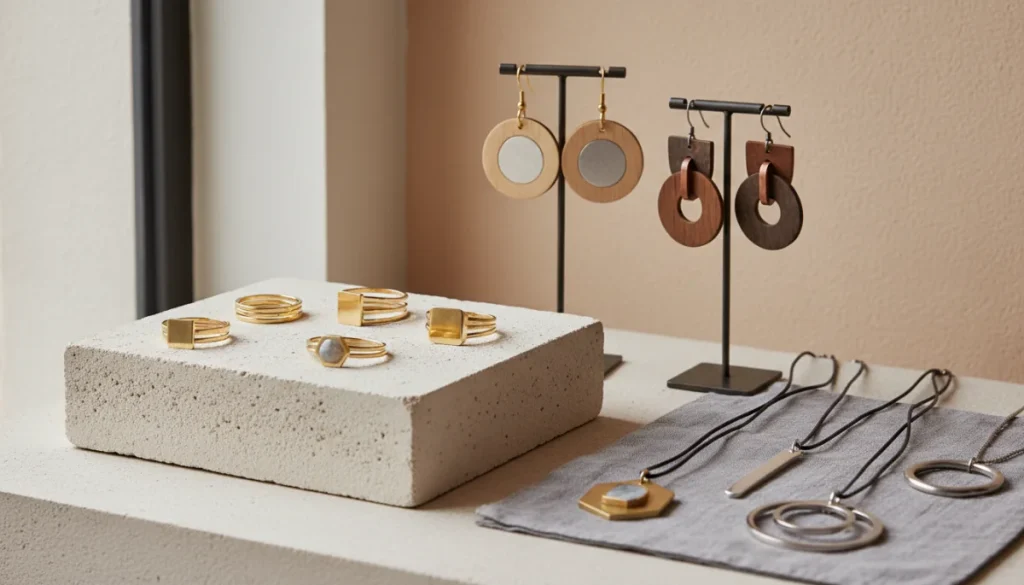
Beyond recycled metals, alternative materials are gaining serious traction. Bamboo, wood, recycled glass, and even ocean-bound plastics are being crafted into wearable art. These materials offer unique textures and appearances that traditional jewelry simply cannot match. A bamboo bangle carries a warmth and lightness that gold cannot replicate, while recycled glass beads catch light in ways that evoke ocean waves.
Key sustainable materials gaining popularity
The sustainable jewelry movement has introduced materials that were once relegated to craft projects into the high-fashion realm. These innovations are replacing traditional options across every category of jewelry.
- Recycled precious metals reduce environmental impact while maintaining luxury appeal
- Lab-grown diamonds and gemstones offer conflict-free alternatives to mined stones
- Organic materials like wood, bamboo, and seeds provide natural aesthetics
- Upcycled materials transform waste into wearable art
The appeal extends beyond environmental consciousness. Many consumers report feeling better about their purchases when they understand the provenance of their jewelry. Knowing that a piece was created with recycled materials or ethically sourced stones adds intangible value that transcends traditional luxury signaling.
Advertisement
Minimalist designs overtaking statement pieces
The maximalist era of oversized chandelier earrings and chunky statement necklaces is giving way to a quieter revolution. Minimalist jewelry is replacing traditional bold pieces, offering sophistication through restraint rather than ostentation.
This shift reflects changing lifestyle patterns. Modern professionals often move between contexts throughout their day—morning meetings, afternoon workouts, evening social gatherings. Jewelry that transitions seamlessly across these scenarios proves more valuable than pieces designated for single occasions. A delicate gold chain works equally well over a blazer collar or a casual tee, adapting to context without demanding attention.
The beauty of minimalist design lies in its versatility. Thin bands stack beautifully, allowing wearers to create personalized combinations that evolve with their mood and outfit. This modular approach to jewelry has replaced the need for numerous distinct pieces. One thin gold ring might seem unremarkable, but a stack of three or four creates a curated, intentional aesthetic.
Quality takes precedence over quantity in this paradigm. Rather than accumulating numerous statement pieces, consumers invest in fewer but finer items. A single pair of meticulously crafted pearl studs replaces an entire jewelry box of trendy earrings. This approach aligns perfectly with sustainable principles while satisfying the desire for timeless elegance.
Gender-neutral jewelry breaking conventional boundaries
The binary approach to jewelry—delicate pieces for women, bold pieces for men—is rapidly becoming obsolete. Gender-neutral jewelry is replacing traditional gendered designs, offering everyone access to the full spectrum of accessorizing options.
This movement goes beyond marketing adjustments. Designers are fundamentally rethinking form, scale, and aesthetic to create pieces that transcend gendered expectations. A chunky chain necklace that once signaled masculinity now adorns necks across the gender spectrum. Delicate earrings that were once exclusively feminine now appear on anyone who appreciates their beauty.
The acceptance of gender-neutral jewelry reflects broader social progress. Younger generations, in particular, reject the notion that certain aesthetics should be reserved for specific genders. They choose pieces based on personal preference rather than societal expectations, creating a more inclusive jewelry landscape.
For many, this shift feels liberating. The freedom to wear any piece regardless of gender markers opens creative possibilities previously unavailable. A person might combine traditionally masculine and feminine elements to create something entirely new—a chain-link bracelet paired with a pearl pendant, for instance—that defies categorization while expressing individual style.
Lab-grown stones challenging mined gem traditions
The diamond industry, long defined by mined stones and their associated controversies, faces unprecedented disruption. Lab-grown diamonds and gemstones are replacing traditional mined options, offering identical chemical composition at a fraction of the cost and environmental impact.
The technology behind lab-grown gems has advanced dramatically. These stones are not imitations—they share the same atomic structure as their mined counterparts. Professional gemologists require specialized equipment to distinguish between them, and even then, the differences are minimal to nonexistent in terms of visual appearance.
Consumer acceptance has grown substantially. What once might have felt like a compromise now carries its own prestige. Choosing a lab-grown stone signals consciousness—awareness of the environmental cost of mining and the ethical concerns surrounding conflict diamonds. This informed choice has become a status symbol in its own right.
The price differential enables new possibilities. A budget that might have purchased a modest mined diamond now acquires a substantially larger lab-grown stone. Some consumers redirect savings toward additional pieces, building a collection rather than a single investment. Others appreciate the ability to upgrade quality without increasing expenditure.
Personalization and custom jewelry replacing mass production
Mass-produced jewelry, once the backbone of accessible fashion, faces declining interest. Consumers increasingly seek personalized pieces that reflect their unique stories, replacing generic options with meaningful custom creations.
The desire for personalization manifests in multiple ways. Some commission entirely custom pieces designed in collaboration with jewelers. Others modify existing designs through engraving, gemstone selection, or metal choices. Even small customizations—adding initials, incorporating birthstones, adjusting proportions—transform mass-produced items into personal treasures.
Technology has democratized custom jewelry. Computer-aided design allows jewelers to visualize and modify pieces before production begins. 3D printing enables rapid prototyping of custom components. These tools reduce the cost and complexity of one-of-a-kind pieces, making personalization accessible to broader audiences.
The emotional value of personalized jewelry exceeds that of mass-produced alternatives. A ring engraved with a meaningful date or a pendant containing a family gemstone carries significance that commercial pieces cannot match. These items become heirlooms in their own right, destined to be passed forward with their stories intact.
Silicone and alternative materials replacing traditional wedding bands
The wedding band, perhaps the most traditional category of jewelry, is experiencing its own quiet revolution. Silicone rings and alternative materials are replacing traditional gold and platinum bands for everyday wear while maintaining symbolic significance.
Practical considerations drive this shift. Traditional metal bands can damage during physical activity, snag on clothing, or conduct electricity—concerns for those with active lifestyles. Silicone bands address all these issues while remaining comfortable and durable. Many couples now purchase traditional rings for ceremonial occasions and silicone alternatives for daily wear.
The symbolism remains intact despite material changes. A silicone ring still represents commitment, still gets exchanged during ceremonies, still marks the union of two people. The material has changed, but the meaning endures. This pragmatism reflects modern attitudes toward tradition—respecting significance while adapting to contemporary life.
Beyond silicone, alternative metals gain acceptance. Titanium, tungsten carbide, and ceramic offer distinct aesthetics and properties. Some appreciate the industrial look of brushed titanium. Others prefer the nearly indestructible nature of tungsten. These options expand the definition of what wedding jewelry can be.
What comes next
The transformation of jewelry preferences reflects broader cultural movements toward sustainability, inclusivity, and authenticity. These jewelry trends replacing traditional pieces are not isolated phenomena but interconnected expressions of changing values. As consumers continue to seek meaning in their purchases, the shift toward conscious, personalized, and versatile jewelry will likely accelerate.
Traditional jewelry maintains its place in many collections and ceremonies. Heirloom pieces continue to carry sentimental weight, and classic designs retain their appeal. However, the jewelry landscape now accommodates multiple approaches simultaneously. A modern jewelry box might contain both a great-grandmother’s pearls and a pair of sustainably sourced bamboo earrings—each valued for different reasons, each meaningful in its own way.
The industry continues to evolve in response to these preferences. Jewelers who embrace sustainable practices, offer personalization, and design for diverse audiences position themselves at the forefront of this transformation. For consumers, this evolution means more choices, better values, and jewelry that genuinely reflects who they are.
| Trend category | Traditional alternative |
|---|---|
| Sustainability | Recycled metals and lab-grown stones replacing newly mined materials |
| Design aesthetic | Minimalist pieces replacing statement jewelry for everyday wear |
| Gender norms | Gender-neutral designs replacing traditionally gendered jewelry categories |
| Personalization | Custom and engraved pieces replacing mass-produced generic jewelry |
Impact and implications
The shift in jewelry preferences carries significant implications for both consumers and the industry. For consumers, these jewelry trends replacing traditional pieces offer opportunities to align purchases with personal values. The ability to choose sustainable, ethical, and personalized pieces transforms jewelry buying from mere consumption into meaningful expression.
For the industry, adaptation proves essential. Jewelers who recognize these shifts and respond thoughtfully position themselves for continued relevance. Those who cling to outdated models risk alienating a generation of consumers for whom sustainability and authenticity are non-negotiable.
The future of jewelry likely involves continued experimentation with materials, designs, and production methods. Technology will enable new possibilities—from advanced personalization tools to innovative sustainable materials not yet imagined. What remains constant is the human desire to adorn, to express, to mark significant moments. The forms may change, but the fundamental impulse endures.