Outfit Proportions: 5 Rules That Transform Your Style
Advertisement
Mastering outfit proportions transforms how you look in every piece of clothing you own. These 5 essential rules help you balance silhouettes, choose flattering ratios, and create polished looks effortlessly. Whether building a capsule wardrobe or dressing for a special occasion, understanding proportions gives you the confidence to wear anything well.
Outfit proportions: The 5 rules that instantly elevate any look
There is a reason some outfits simply work while others feel off, even when each piece is beautiful on its own. The difference often comes down to proportions. Understanding how to balance different elements in an outfit is the skill that separates someone who gets dressed from someone who gets dressed well.
Outfit proportions refer to the visual relationships between different parts of your clothing and how they relate to your body. These ratios determine whether an outfit looks intentional and harmonious or accidental and cluttered. The good news is that anyone can learn these principles, regardless of body type or personal style. Once you understand the basic rules, you can apply them to every outfit choice you make, from casual weekends to professional presentations.
This guide breaks down five essential proportion rules that will transform how you approach getting dressed. These are not rigid formulas but rather flexible principles you can adapt to your unique body and taste. By the end, you will have a clear framework for making smarter styling decisions every day.
The golden ratio: Why proportions matter in fashion
The concept of proportion in clothing draws from the same principles that govern art and architecture. The golden ratio, approximately 1.618, has been used for centuries to create visually pleasing compositions. In fashion, this translates to specific relationships between different elements of an outfit that the human eye naturally finds attractive.
Advertisement
When proportions are off, the brain registers visual discomfort even if you cannot immediately identify the problem. A shirt that is slightly too long creates an unintended boxy silhouette. Pants that pool too much at the ankles make you appear shorter. These small details accumulate, affecting how polished and put-together you look. Conversely, when proportions are right, even simple pieces create a sophisticated impression.
Proportions also interact with your body shape in meaningful ways. The same outfit that looks effortlessly chic on one person might need adjustment for another. Understanding these principles allows you to customize your clothing choices to flatter your specific frame. This is not about following strict rules but about understanding visual relationships so you can make informed choices that work for you.
Rule one: The waist is your anchor point
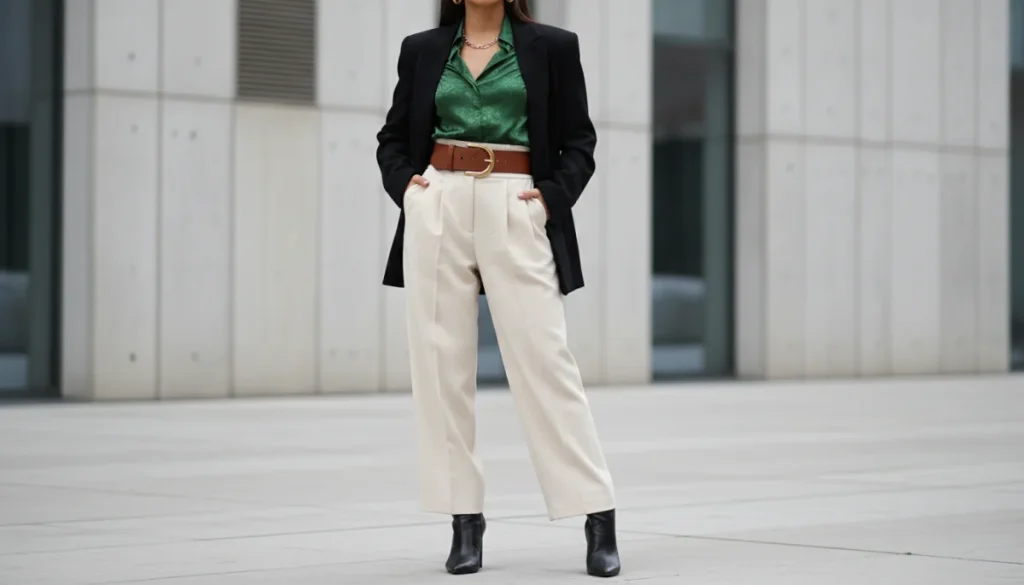
The waistline is the most critical element in achieving good outfit proportions. It serves as the visual anchor that divides your torso and legs, creating the foundation for balanced silhouettes. Regardless of whether you prefer high-waisted, mid-rise, or low-rise styles, defining your waist creates structure and intentionality in any outfit.
Advertisement
Creating definition with belts and tucking
One of the simplest ways to improve your outfit proportions is to define your waist deliberately. A well-placed belt can transform a shapeless dress into a structured look. Tucking in your top, whether fully or partially, instantly creates a more polished appearance. This technique works across casual and formal contexts, making it a versatile tool in your styling arsenal.
The height of your waist also affects how your legs appear. High-waisted pants and skirts tend to create the illusion of longer legs, while low-rise options can shorten your silhouette. For most body types, a waistline that sits at or slightly above your natural waist produces the most flattering proportions. However, personal preference and comfort should guide your final choices.
- Use belts to create definition at the waist
- Experiment with full or partial tucking techniques
- Choose waist heights that complement your leg length
- Look for tops that hit at or below the waistband
Rule two: Balance top and bottom proportions
Creating visual balance between your upper and lower body is essential for harmonious outfits. This does not mean wearing identical volumes on top and bottom but rather ensuring that neither area overwhelming the other. The relationship between your shirt and pants forms the backbone of most outfit combinations.
If you are wearing a loose-fitting top, consider pairing it with more fitted bottoms and vice versa. This contrast creates interest and prevents your outfit from looking sloppy or shapeless. The key is creating enough distinction between the two areas that each piece has room to breathe visually. A flowing blouse looks intentional with tailored trousers, just as a structured jacket pairs well with relaxed jeans.
This principle extends to patterns and textures as well. A busy, patterned top calls for solid bottoms to maintain balance. Heavily textured pieces benefit from smoother counterparts. Think of your outfit as a composition where each element needs adequate space to contribute without competing for attention.
Rule three: Master the art of hemlines
Hemlines carry surprising power in determining how proportional your outfit appears. The length of your pants, skirts, and dresses all affect the visual balance of your silhouette. Understanding which hemlines flatter your body type helps you make more confident choices when shopping or getting dressed.
For pants, the ideal length typically creates a small break at the shoe or just grazes the top of your foot. Pants that are too long create visual clutter at the ankles, while those that are too short can make your legs appear shorter. The goal is a clean line that elongates your frame. Ankle-length pants can work well if they hit at the narrowest part of your ankle, creating a lengthening effect.
Dress and skirt lengths follow similar principles. Midi lengths often provide the most versatile option, falling below the knee and creating a sophisticated silhouette. Mini skirts can make legs appear longer but may limit professional appropriateness. Maxi dresses and skirts work best when they skim the floor without bunching, creating a clean vertical line that adds height.
Rule four: Layer strategically for dimension
Layers do more than provide warmth or style variety; they create opportunities to refine your outfit proportions. A well-chosen layer can add structure, introduce new color relationships, and create visual interest that elevates your look. The key is understanding how different layering pieces affect your overall silhouette.
Cardigans, jackets, and coats all impact proportions differently. A cropped jacket, for instance, can shorten your torso and make your legs appear longer. A long coat, on the other hand, creates a streamlined vertical line that can be incredibly flattering. Blazers offer versatility, with structured options adding formality and relaxed fits creating casual sophistication.
When layering, consider the visual weight of each piece. Heavier fabrics add bulk, while lightweight materials create movement. The order in which you layer affects both comfort and appearance. Learning to layer effectively expands your wardrobe options significantly, allowing you to create multiple looks from the same pieces by simply adding or removing a layer.
Rule five: Use color and pattern strategically
Color and pattern placement can dramatically shift visual proportions, often more than people realize. Strategic use of these elements draws attention to areas you want to highlight and away from those you prefer to minimize. This is one of the most powerful tools for customizing proportions to your body.
Darker colors generally recede visually, while lighter colors advance. This means wearing darker shades on areas you want to appear smaller and lighter colors on areas you want to emphasize. A dark bottom with a lighter top creates balance for many body types. Vertical stripes elongate the silhouette, while horizontal stripes can add width. These are starting points to experiment with based on your specific goals.
Pattern scale also affects proportions. Larger patterns can overwhelm smaller frames, while smaller patterns may get lost on larger ones. Finding the right scale for your body creates harmony. Solid colors provide versatility and can anchor more adventurous pattern choices. Building a wardrobe with both allows you to mix and match with confidence.
| Proportion Rule | Key Application |
|---|---|
| Waist definition | Use belts and tucking to create visual anchor points |
| Top and bottom balance | Pair loose tops with fitted bottoms and vice versa |
| Hemline mastery | Choose lengths that create clean lines and elongate silhouette |
| Strategic layering | Use jackets and coats to add structure and modify proportions |
What comes next
Understanding outfit proportions opens up a new way of approaching your wardrobe. These five rules provide a foundation, but the real mastery comes from applying them consistently and observing how they work for your unique body. Start by paying attention to how different combinations make you feel and look. Notice what creates that satisfying sense of put-togetherness versus what feels slightly off.
As you become more comfortable with these principles, you will find yourself making faster, more confident decisions when getting dressed. The investment in understanding proportions pays dividends every single day. Whether you are building a capsule wardrobe, shopping for new pieces, or simply wanting to feel more polished in your daily choices, these rules serve as your guide to better styling.
The beauty of proportion knowledge is its universality. These principles work across seasons, occasions, and personal styles. They adapt to whatever is in your closet rather than requiring constant new purchases. By learning to see your clothing in terms of visual relationships, you unlock the ability to create countless harmonious outfits from what you already own. This is the true power of understanding outfit proportions.